Electric vs. Gas Cars in 2026: Which Is Better to Drive? 🚗⚡
The Price, the Performance & the Problems Nobody Talks About. 🚗
Remember when buying a car was simple?
You picked something you liked, checked the gas mileage, made sure the monthly payment wasn't outrageous, and hoped it wouldn't leave you stranded on the highway. 😂
Now buying a car feels like choosing sides in a technology war.
One person is telling you electric cars are the future. Someone else swears they'll never give up their gas-powered engine. Meanwhile, you're just trying to figure out which car won't have you questioning your financial decisions every month. 😭💸
And honestly? Both sides have a point.
Electric vehicles promise quiet rides, quick acceleration, and potentially lower energy and maintenance costs. Gas-powered cars offer familiar technology, fast refueling, and a wide range of choices.
But here's the question everyone really wants answered:
Which one is actually better to own and drive in 2026?
⚡ Electric vs. Gas Cars: What's the Difference?
Before we get into the arguments, let's cover the basics.
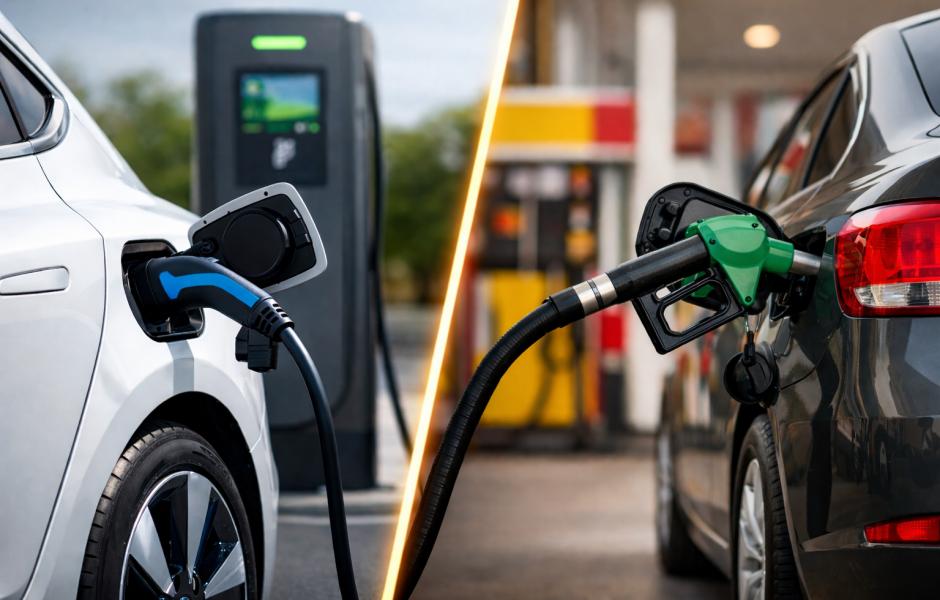
An electric vehicle (EV) runs on electricity stored in a rechargeable battery. Instead of filling up at a gas station, you recharge the vehicle using a home charger or public charging station.
A gas-powered vehicle uses an internal combustion engine fueled by gasoline. You refill the tank at a gas station and maintain components such as engine oil, spark plugs, and exhaust systems.
And then there's the middle ground: hybrid vehicles, which combine a gasoline engine with an electric motor. Some hybrids recharge their batteries through driving, while plug-in hybrids can also be charged from an external power source.
Here's how they compare:
Feature | Electric Cars ⚡ | Gas Cars ⛽ |
|---|---|---|
Energy source | Rechargeable battery | Gasoline |
Refueling | Home or public charging | Gas stations |
Driving feel | Quiet with quick acceleration | Familiar engine performance |
Routine maintenance | No engine oil changes | Engine oil and other regular service |
Road trips | May require charging stops | Typically quick refueling |
Driving emissions | No tailpipe emissions | Produces tailpipe emissions |
Upfront cost | Varies, often higher | More budget-priced choices |
For a deeper explanation of electric vehicles, visit the U.S. Department of Energy's Alternative Fuels Data Center.
💸 But Which One Actually Saves You Money?
This is where things get interesting.
An electric car might cost more to purchase but less to power, particularly if you can charge at home using favorable electricity rates.
A gas-powered car might be less expensive upfront but require more spending on gasoline and routine engine maintenance over time.
Then you have other expenses people don't always consider:
- Insurance premiums: Costs can vary significantly between models.
- Depreciation: Some vehicles lose value faster than others.
- Repairs: Specialized components and labor can affect repair bills.
- Charging equipment: Installing a home charger may involve additional costs.
- Driving habits: Your annual mileage influences fuel or electricity spending.
So, while one vehicle might look cheaper on the dealership lot, that doesn't automatically mean it's cheaper to own.
The U.S. Department of Energy provides vehicle fuel economy and energy cost information to help shoppers compare different models.
🌴 What About Driving in Tampa Bay?
Now let's bring this conversation a little closer to home.
Whether you're commuting through Downtown Tampa, driving along I-275, heading from Wesley Chapel to Brandon, or planning a weekend trip to Orlando, your everyday driving habits matter.
For example:
An electric car might make sense if:
- You have convenient access to home charging.
- Most of your driving involves local commutes.
- You want a quieter driving experience.
- You're comfortable planning charging stops for longer trips.
A gas-powered car might make sense if:
- You regularly take long road trips.
- You don't have reliable charging access at home.
- You want quick, familiar refueling.
- You're shopping within a budget where gas models offer more choices.
And if you're somewhere in the middle?
A hybrid might deserve a spot on your shopping list, too. 👀
🚗 The Best Car Isn't Always the Most Expensive One
Let's be real.
A car can have a giant touchscreen, heated seats, panoramic roof, and enough technology to make you feel like you're piloting a spaceship.
But if the payment, insurance, and operating costs don't fit your budget, those features might not feel quite as exciting six months later. 😭
The best car to drive is one that fits your budget, your driving habits, and your everyday needs.
For some drivers, that's a practical gas-powered sedan.
For others, it's a fully electric SUV.
And for people who want better fuel efficiency without depending entirely on charging stations, a hybrid could offer an appealing balance.
Throughout this blog, we'll compare the pros and cons of electric vs. gas cars in 2026, explore ownership costs, charging, driving range, maintenance, and highlight vehicles worth considering.
Because choosing your next car shouldn't be about winning an argument online.
It should be about finding something you actually enjoy driving without regretting the purchase later. 😂🚗
And speaking of regrets…
Let's start with the part nobody can ignore.
The price tag. 💸
Because the real question isn't just whether electric or gas is better.
It's which one is going to cost you more money in the long run.
LET'S TALK MONEY… BECAUSE THESE CARS AREN'T CHEAP. 💸🚗
So, you've found your dream car.
The color is perfect. The interior is beautiful. The touchscreen looks like something out of a spaceship. And the salesperson is telling you how affordable the monthly payment could be.
But wait… what is this car actually going to cost you?! 😭
Because buying a vehicle isn't just about the price on the window sticker. Between financing, insurance, fuel, charging, maintenance, and depreciation, the real cost of owning a car can look very different from the advertised price.
And when it comes to electric vs. gas cars in 2026, understanding those costs could make a major difference in your decision.
💰 1. The Purchase Price: Electric vs. Gas Cars
Let's start with the obvious.
Electric vehicles can cost more upfront than comparable gas-powered cars, although the difference varies by manufacturer, model, features, and available discounts.
EVs use large battery packs and specialized technology, which can influence their purchase prices.
Gas-powered vehicles, meanwhile, offer a broad selection of lower-priced models, especially in the compact sedan and small SUV categories.
But don't assume every electric car is expensive or every gas car is affordable.
The smartest approach is to compare vehicles with similar sizes, features, and equipment rather than comparing a luxury electric SUV with a basic gas-powered sedan.
What to compare before buying:
- Manufacturer's suggested retail price (MSRP).
- Dealer discounts and additional fees.
- Sales tax, registration, and title costs.
- Financing rates and loan terms.
- Manufacturer incentives and available rebates.
- The final out-the-door price.
And remember, tax incentives for electric vehicles can change. Check current eligibility rather than assuming a particular vehicle qualifies.
For vehicle-specific fuel and energy information, visit FuelEconomy.gov.
⛽ 2. Gas vs. Electricity: Which Is Cheaper?
Here's where electric vehicles can have an advantage.
Charging an EV at home is often less expensive per mile than buying gasoline for a comparable vehicle.
However, the actual savings depend on electricity rates, gasoline prices, vehicle efficiency, and where you charge.
Let's look at a hypothetical example.
Imagine two vehicles driven 1,000 miles per month.
Monthly driving expense | Gas car ⛽ | Electric car ⚡ |
|---|---|---|
Efficiency | 30 mpg | 3 miles per kWh |
Energy price | $3.50/gallon | $0.16/kWh |
Monthly distance | 1,000 miles | 1,000 miles |
Estimated energy cost | $116.67 | $53.33 |
In this example, the electric vehicle saves approximately $63 per month, or about $760 per year, before charging losses, fees, and other ownership costs.
Not bad, right? 👀
But there's a catch.
Public fast charging can cost considerably more than home charging.
If you're relying heavily on public charging stations, your savings could shrink, and some charging situations may cost as much as or more than driving an efficient gasoline vehicle.
The U.S. Department of Energy's Alternative Fuels Data Center provides additional information about electric vehicle charging and costs.
🛡️ 3. Car Insurance: The Expense That Can Ruin the Excitement
You finally find a vehicle with a monthly payment that fits your budget.
Then you call your insurance company.
And suddenly you're reconsidering the entire purchase. 😭😂
Insurance premiums depend on factors such as the vehicle model, repair costs, location, driving history, coverage, and insurer.
Some electric vehicles may cost more to insure because of their purchase prices, specialized parts, or repair requirements.
But gas-powered vehicles aren't automatically cheaper to insure. A high-performance gasoline sports car could cost significantly more to cover than a practical electric sedan.
Before buying either type of vehicle, request insurance quotes using the exact models you're considering.
That one step could save you from a very expensive surprise.
🔧 4. Maintenance: Where Electric Cars May Save Money
One advantage of fully electric vehicles is that they have fewer routine engine-related maintenance requirements.
No engine oil changes.
No spark plugs.
No traditional exhaust system.
And regenerative braking can reduce wear on conventional brake components.
But that doesn't mean electric cars are maintenance-free.
EVs still need tires, cabin air filters, brake inspections, suspension maintenance, and other services. Tires can also be a significant expense depending on vehicle weight, performance, and driving habits.
Gas-powered vehicles typically require additional engine-related maintenance, including oil changes and other services specified by the manufacturer.
Over time, those differences can affect total ownership costs.
📉 5. Depreciation: The Cost Nobody Sees Coming
Here's something people don't always think about when buying a new car.
Your vehicle can lose value even while you're making payments on it.
That's depreciation.
And it matters whether you're buying electric or gas.
Resale values depend on demand, vehicle condition, mileage, reliability, new-car pricing, and changing technology.
Some electric models have experienced substantial depreciation, while others retain value better. Gas vehicles also vary widely.
Before signing anything, research the resale history of the specific model you're considering.
Because a low monthly payment doesn't automatically mean you're getting a good long-term deal.
🏡 6. Don't Forget the Cost of Charging at Home
For many EV owners, charging at home is one of the biggest conveniences.
Imagine pulling into your driveway, plugging in your car, and waking up with enough battery for your daily commute.
No gas station stop required. ⚡
But installing a home charging setup can involve additional expenses.
Depending on your property, you may need:
- A compatible charging unit.
- A suitable electrical outlet or dedicated circuit.
- Professional electrical installation.
- Electrical panel upgrades, if necessary.
- Approval from a landlord, condominium association, or HOA where applicable.
Some vehicles can charge using an ordinary household outlet, although this is generally much slower than Level 2 charging.
For Tampa Bay drivers considering an electric vehicle, reliable charging access at home can make a meaningful difference in convenience and cost.
💸 So, Which Car Actually Costs Less?
Here's the answer nobody loves hearing:
It depends. 😂
An electric car may cost more upfront but save money on energy and certain maintenance expenses.
A gas-powered vehicle may have a lower purchase price and offer convenient refueling, but gasoline and engine maintenance can add up.
And a hybrid could provide an appealing middle ground for drivers who want better fuel efficiency without relying entirely on charging stations.
The best way to compare your options is to calculate the total cost of ownership, including purchase price, financing, insurance, energy, maintenance, depreciation, and charging equipment.
The cheapest car to buy isn't always the cheapest car to own.
And now that we've talked about money, there's another major difference between electric and gas vehicles.
How you keep them moving.
Because filling a gas tank takes minutes, but charging an electric vehicle can be a completely different experience.
And depending on your lifestyle, that difference could be a dealbreaker. 👀⚡
GAS STATIONS VS. CHARGING STATIONS. ⛽⚡
Imagine pulling into a gas station with your tank almost empty.
You swipe your card, pump your gas, and five minutes later, you're back on the road.
Now imagine pulling up to an electric vehicle charging station.
You plug in, check the screen, and realize you're going to be there a little longer than expected.
Wait… am I supposed to sit here and make myself comfortable?! 😭😂
Welcome to one of the biggest differences between electric vs. gas cars in 2026: how you refuel, how long it takes, and how much planning your vehicle requires.
But before you assume gas-powered cars automatically win this round, there's something electric vehicle owners want you to know.
What if you could wake up every morning with your car already charged? 👀⚡
⛽ 1. Gas Stations: Quick, Familiar & Almost Everywhere
Let's give gasoline-powered vehicles their credit.
Convenience is one of their biggest advantages.
Gas stations are widely available throughout the United States, and filling up a typical passenger vehicle usually takes just a few minutes once you're at the pump.
Whether you're commuting through Tampa, driving to Orlando, or heading out on a weekend road trip, finding a gas station generally doesn't require much planning.
The advantages of gas stations include:
- Quick refueling.
- Widespread availability.
- No charging equipment required at home.
- Convenient stops during long-distance travel.
- Familiar payment and refueling processes.
And let's be real, sometimes you just want to fill up and GO. 😂
However, that convenience comes with a trade-off.
Gasoline prices fluctuate, and drivers must continue purchasing fuel throughout the vehicle's ownership.
⚡ 2. Home Charging: The Convenience Gas Cars Can't Offer
Now here's where electric vehicles start looking interesting.
Imagine getting home after work, plugging your car into a charger, and going inside to relax.
You make dinner, watch television, get some sleep, and wake up with your vehicle charged for the day.
No last-minute gas station stop before work. No standing outside in the Florida heat waiting for your tank to fill. 🌴😂
For EV drivers with reliable home charging, this can be one of the most convenient parts of ownership.
But how quickly your vehicle charges depends on the equipment you're using.
🔌 3. Level 1, Level 2 & DC Fast Charging: What's the Difference?
Not all electric vehicle chargers work the same way.
Here's a simple breakdown:
Charging type | How it works | Typical experience |
|---|---|---|
Level 1 | Standard 120-volt household outlet | Slow charging, often suitable for limited daily driving |
Level 2 | Typically uses a 240-volt connection | Faster charging, commonly used at homes and public locations |
DC Fast Charging | High-powered public charging equipment | Can add substantial range in approximately 20–40 minutes on compatible vehicles |
Important: Charging times vary considerably depending on the vehicle, battery size, charger power, temperature, and battery charge level. Some vehicles charge much faster or slower than the examples above.
According to the U.S. Department of Energy, charging equipment is available at different power levels for different driving needs.
For many EV owners, Level 2 home charging provides a practical balance between speed and convenience.
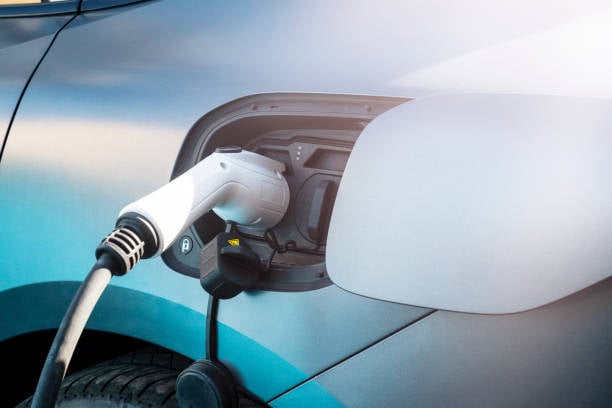
👀 4. Public Charging: Convenient… Until It Isn't
Public charging stations can be helpful when you're shopping, traveling, or driving farther than your usual daily commute.
Some are located near:
- Shopping centers and grocery stores.
- Hotels and parking garages.
- Restaurants and entertainment destinations.
- Highway travel corridors.
- Workplaces and commercial properties.
But public charging isn't always as simple as pulling into a gas station.
Potential challenges include:
- Charging stations already being occupied.
- Equipment that is temporarily unavailable.
- Different charging networks and payment systems.
- Chargers that deliver less power than expected.
- Vehicles requiring adapters or compatible connectors.
- Longer waits during busy travel periods.
And here's something worth knowing: not every electric vehicle can use every charging station without the appropriate connector or adapter.
Before buying an EV, check its charging compatibility and the networks available along your regular routes.
You can explore charging locations using the Alternative Fuels Data Center's Station Locator.
🚗 5. What Happens When You're Running Late?
Picture this.
You're already late for work.
You grab your keys, rush outside, and realize your car needs energy.
Gas car: Stop at the nearest station, fill up, and continue driving.
Electric car with a charged battery: Get in and leave because you charged overnight.
Electric car with a low battery and no home charger: Now you may need to locate an available public charger and allow enough time to charge.
See the difference?
The most convenient vehicle depends heavily on your daily routine and access to charging.
For someone who can charge at home, an EV may require fewer dedicated refueling stops.
For someone who relies entirely on public charging, a gasoline vehicle may offer greater flexibility.
🌴 6. Charging an Electric Car in Tampa Bay
If you're considering an EV in Tampa Bay, think about more than whether charging stations exist.
Think about where you'll actually charge.
For example:
If you live in a single-family home: You may have the option to install a home charger, depending on the property's electrical setup and applicable requirements.
If you rent an apartment: You'll want to find out whether the property offers charging stations, whether they're available to residents, and what they cost.
If you live in a condo or townhome: Parking arrangements, electrical infrastructure, and association requirements may influence your charging options.
If you commute regularly: Charging at home or work could make electric vehicle ownership considerably more convenient.
And if you're exploring homes around Tampa Bay, features such as garage parking, electrical capacity, and potential EV charging access may be worth considering.
⚡ 7. The Real Winner Depends on How You Drive
So, who wins the refueling battle?
Gas-powered cars win when it comes to quick, widely available refueling.
Electric cars can win when it comes to the convenience of charging at home.
Neither advantage automatically makes one vehicle better for everyone.
Here's a quick way to think about it:
- Choose gas if you prioritize quick refueling and frequently travel long distances without wanting to plan charging stops.
- Consider electric if you have dependable home charging and want the convenience of starting most days with a charged battery.
- Consider a hybrid if you want improved fuel efficiency while keeping the convenience of gasoline refueling.
And before you make your final decision, there's another question you need to ask.
How far can you actually drive before you need to stop?
Because nobody wants to be halfway through a road trip, watching their remaining range drop, and suddenly wondering whether the next charging station is 80 miles away. 😭🚗
Let's talk about driving range, road trips, highway speeds, and what happens when your battery or gas tank starts running low.
HOW FAR CAN YOU REALLY GO BEFORE PANICKING? 😭🚗⚡
Picture this.
You're on a road trip. The music is playing, your snacks are secured, and you're feeling like the main character in a travel movie.
Then you look at your dashboard.
42 miles remaining.
And the next gas station or charging station?
Nowhere in sight. 😭
Suddenly, the music isn't hitting the same, you're turning down the AC, and everybody in the car has gone suspiciously quiet.
Welcome to range anxiety. 😂
Whether you're driving an electric vehicle or a gas-powered car, nobody enjoys wondering if they'll make it to their next stop.
But when comparing electric vs. gas cars in 2026, driving range is one of the biggest differences worth understanding.
🚗 1. How Far Can Gas Cars Actually Go?
Gas-powered vehicles have one major advantage when it comes to long-distance driving: a combination of substantial driving range and quick refueling.
Many modern gasoline-powered passenger vehicles can travel approximately 300–500 miles on a full tank, although the actual distance depends on the vehicle's fuel economy, tank size, driving conditions, and speed.
Some fuel-efficient models and hybrids can travel even farther.
For example, a vehicle with a 15-gallon fuel tank averaging 30 miles per gallon could theoretically travel:
15 gallons × 30 mpg = 450 miles per tank.
Not bad, right? 👀
And when the tank starts getting low, finding a gas station is usually pretty straightforward.
The biggest advantages of gas-powered vehicles for road trips include:
- ⛽ Widespread gas station availability.
- 🚗 Quick refueling stops.
- 🛣️ Familiar long-distance driving experience.
- 📍 Less need to plan stops around specialized infrastructure.
- 💨 Minimal downtime when refueling.
Of course, your actual mileage may vary depending on traffic, weather, driving habits, and vehicle condition.
⚡ 2. How Far Can Electric Cars Go on One Charge?
Here's where electric vehicles have come a long way.
Remember when people assumed every electric car could barely make it across town?
That's no longer an accurate picture of the EV market. 👀
Many modern electric vehicles offer EPA-estimated driving ranges of roughly 200–350 miles, while certain long-range models can exceed 400 miles under standardized testing.
However, not every electric vehicle offers the same range.
Battery size, vehicle efficiency, weight, tires, and driving conditions all influence how far an EV can travel.
And just because a vehicle advertises 300 miles of range doesn't mean you'll always travel exactly 300 miles before charging.
For official estimates, the U.S. Department of Energy's FuelEconomy.gov allows shoppers to compare electric and gasoline-powered vehicles.
🌡️ 3. Does Florida Heat Affect Electric Car Batteries?
Living in Tampa Bay means dealing with sunshine, humidity, and temperatures that can make your steering wheel feel like it came straight out of an oven. 😭☀️
But can hot weather affect electric vehicle range?
Yes. Extreme temperatures can influence EV efficiency and battery performance.
When it's hot outside, your vehicle may use additional energy to cool the cabin and manage battery temperature.
And that extra energy use can reduce the distance you travel on a charge.
But here's something important:
Gas-powered vehicles are also affected by driving conditions and air conditioning use.
The difference is how those factors influence each vehicle's efficiency.
For EV drivers in Florida, helpful habits include:
- Parking in shaded areas when practical.
- Pre-cooling the cabin while connected to a charger, if the vehicle supports it.
- Maintaining recommended tire pressure.
- Avoiding unnecessary aggressive acceleration.
- Following the manufacturer's battery and charging recommendations.
And no, you don't have to drive around Tampa without air conditioning just to save a few miles.
We're trying to save energy, not melt in traffic on I-275. 😂
🛣️ 4. Electric vs. Gas Cars on the Highway
Here's something that surprises some first-time EV shoppers.
Electric vehicles often use more energy per mile at higher highway speeds than they do during slower driving.
That's partly because aerodynamic drag increases as speed rises.
Gasoline-powered vehicles are also affected by speed, but their fuel economy patterns can differ because of engine efficiency and gearing.
This means an EV's estimated range may be easier to achieve during certain mixed-driving conditions than during sustained high-speed highway travel.
Other factors that can influence range include:
- Strong headwinds.
- Heavy rain.
- Steep terrain.
- Additional passengers or cargo.
- Towing.
- Tire choice and pressure.
- Cabin heating or cooling.
The takeaway? Don't plan every road trip around achieving the maximum advertised range.
Leave yourself a comfortable buffer.
🌴 5. Tampa to Orlando, Miami & Beyond: Which Is Better?
Let's make this practical.
Imagine you're leaving Tampa for a weekend getaway.
Road trip | Approximate one-way driving distance | What to consider |
|---|---|---|
Tampa to Orlando | 85 miles | Often manageable for many EVs without en-route charging |
Tampa to Sarasota | 60 miles | Usually a relatively short trip for either vehicle type |
Tampa to Fort Myers | 130 miles | EV drivers should consider round-trip range |
Tampa to Miami | 280 miles | Many EVs may need a charging stop depending on range and conditions |
Tampa to Jacksonville | 200 miles | Charging plans depend on the vehicle and available battery |
Distances are rounded planning estimates. Actual mileage varies by starting point, destination, and route.
For many everyday Florida trips, a modern EV can be perfectly practical.
But for longer drives, especially if you're planning to travel hundreds of miles in one day, charging time becomes part of the equation.
A gas-powered vehicle can usually refuel quickly and continue.
An electric vehicle may require a planned stop at a compatible fast charger.
And depending on the vehicle, charger, and battery conditions, that stop could last significantly longer than a typical gas station visit.
🔋 6. What Happens When an EV Battery Gets Low?
First, your electric vehicle generally won't suddenly stop working the moment the battery display shows a low percentage.
Modern EVs typically provide warnings and estimates as the battery gets closer to empty.
However, you should never rely on the last few miles of estimated range.
The displayed number is an estimate, not a guarantee.
If an EV runs out of usable battery energy, it may need roadside assistance and transport to a charging location.
And contrary to what some people assume, you generally can't solve the problem by carrying a spare gas can.
That would be a very expensive lesson in trip planning. 😭
To avoid unnecessary stress:
- Check charging availability before longer trips.
- Confirm that chargers are compatible with your vehicle.
- Plan a backup charging location.
- Allow extra range for unexpected traffic or weather.
- Don't wait until your battery is nearly empty to start searching.
The Alternative Fuels Data Center provides a tool for locating alternative fueling and EV charging stations.
👀 7. So, Is Range Anxiety Really a Dealbreaker?
Not necessarily.
For drivers who commute relatively short distances and charge at home, an electric vehicle's range may be more than enough for everyday needs.
Think about it.
If your commute is 20 miles each way, that's approximately 40 miles per workday.
A vehicle with a usable driving range of 250 miles could theoretically cover several days of that commute before needing a recharge, although actual energy consumption varies.
But if you're constantly traveling long distances, driving through areas with limited charging infrastructure, or making unpredictable trips, a gasoline-powered vehicle may be more convenient.
And that's why the best vehicle isn't always the one with the biggest advertised range.
It's the one that comfortably handles the driving you actually do.
🏆 Who Wins the Driving Range Battle?
Gas cars: Generally offer easier long-distance refueling and fewer infrastructure-related concerns.
Electric cars: Can provide enough range for most routine driving, particularly when home charging is available.
Hybrids: Often offer excellent total driving range while maintaining the convenience of gas stations.
So before you choose your next vehicle, ask yourself:
Am I driving across Tampa every day, or across Florida every weekend?
Because those are two very different driving lifestyles.
And now that we've covered how far these cars can travel, it's time to talk about something that might hurt even more than watching your fuel gauge drop.
The repair bill. 😭🔧
Because whether your vehicle runs on electricity or gasoline, eventually something is going to need attention.
But which one is actually cheaper to maintain?
MAINTENANCE & REPAIRS 🔧💸
YOUR CAR PAYMENT ISN'T THE ONLY THING DRAINING YOUR WALLET! 😭🚗
So you've compared the prices, figured out where to charge or fill up, and calculated how far you can drive before needing a stop.
But there's one expense people tend to forget until that dreaded dashboard light comes on.
MAINTENANCE. 😩
Because buying a car is one thing. Keeping that car running without emptying your bank account? That's a whole different story.
When comparing electric vs. gas cars in 2026, maintenance and repair costs can make a major difference in how much you actually spend over time.

🔧 Gas Cars: More Moving Parts, More Maintenance
Gas-powered vehicles have been around forever, and most of us already know the routine.
You buy the car, enjoy a few peaceful months, and suddenly it's time for another oil change. 😂
Here's what gas-powered vehicles typically need:
🛢️ Oil changes: Regular oil and filter replacements to protect the engine.
🔥 Spark plugs: Eventually need replacing to keep the engine running efficiently.
⚙️ Transmission maintenance: Depending on the vehicle, fluid changes and other services may be necessary.
💨 Exhaust system repairs: Mufflers, catalytic converters, and other components can become expensive.
🔋 Battery replacements: Traditional 12-volt batteries generally need replacing every few years.
🛑 Brake maintenance: Pads and rotors wear down with regular driving.
And the frustrating part?
Sometimes you fix one thing, and another problem shows up two weeks later. 😭
While gas vehicles can be reliable for many years, their engines and mechanical systems generally require more routine maintenance than fully electric vehicles.
⚡ Electric Cars: Fewer Oil Changes… Actually, ZERO!
Here's where electric vehicles start looking pretty attractive.
Fully electric cars don't need engine oil changes.
No spark plugs.
No traditional exhaust system.
And generally, fewer moving parts in their powertrains.
According to the U.S. Department of Energy, all-electric vehicles typically require less maintenance than conventional gas-powered vehicles.
But don't get too excited. Electric vehicles aren't completely maintenance-free. 👀
You'll still need to think about:
🛞 Tires: Some EVs experience faster tire wear because of their weight, torque, and driving characteristics.
🛑 Brakes: Regenerative braking can reduce brake pad wear, but inspections and occasional replacements are still necessary.
❄️ Cooling systems: Battery and power electronics cooling systems may require maintenance.
🔋 12-volt batteries: Many EVs still use an auxiliary battery that eventually needs replacement.
⚡ High-voltage battery repairs: Less routine, but potentially expensive when problems occur outside warranty coverage.
The biggest advantage? EV owners can often spend less on routine maintenance over the life of the vehicle.
💰 But What Happens When Something REALLY Breaks?
Now here's where things get interesting.
While electric vehicles generally cost less to maintain, certain major repairs can be expensive.
Especially when we're talking about the high-voltage battery pack.
Replacing an EV battery outside warranty coverage can cost thousands of dollars, depending on the model and whether the entire pack needs replacement.
But before you panic, that doesn't mean every electric car will need a new battery.
Modern EV batteries are designed to last many years, and new electric vehicles generally come with substantial battery warranties.
For example, federal emissions warranty requirements generally provide at least 8 years or 100,000 miles of coverage for qualifying EV battery components, although exact warranty terms and protections vary by manufacturer and vehicle.
Gas cars aren't exactly innocent either. 👀
A major engine or transmission replacement can also cost thousands.
The takeaway? Both types of vehicles can surprise you with expensive repairs. The difference is how frequently they need routine service and which components are most likely to need attention.
🌴 What About Driving in Tampa Bay?
Let's bring this conversation a little closer to home.
Between Tampa traffic, summer heat, afternoon thunderstorms, and those long stretches of stop-and-go driving on I-275 and I-4, your vehicle deals with plenty.
Florida's hot weather can place additional demands on cooling systems and air conditioning, whether you're driving electric or gas.
For electric vehicle owners, battery thermal management is particularly important in hot climates.
For gas-powered drivers, regular cooling-system maintenance, oil changes, and inspections remain essential.
And regardless of what you're driving, Tampa Bay's heat can be tough on tires and conventional 12-volt batteries.
The smartest move isn't necessarily choosing whichever car promises the lowest maintenance costs.
It's choosing a vehicle that fits your driving habits, budget, and long-term ownership plans.
🏆 SO WHO WINS THE MAINTENANCE BATTLE?
Lower routine maintenance costs
More familiar repair options Gas cars ⛽
Potentially expensive major repairs Both 🚗
Our verdict: Electric vehicles generally win when it comes to routine maintenance and servicing costs. But gas vehicles may offer more familiar repair options, especially for drivers who prefer independent mechanics.
And remember, lower maintenance costs don't automatically mean lower total ownership costs. Insurance, depreciation, financing, and purchase price still matter.
INSURANCE COSTS 🚗💸
YOUR NEW CAR IS CUTE… BUT HAVE YOU SEEN THE INSURANCE BILL?! 😭
You've compared gas prices, charging costs, maintenance, and repairs. You're finally thinking you've found the perfect car.
Then you call your insurance company.
AND SUDDENLY THAT DREAM CAR DOESN'T LOOK SO AFFORDABLE ANYMORE. 😭💀
Because here's something people don't always consider when comparing electric vs. gas cars in 2026:
The price of your car isn't necessarily what determines how expensive it is to insure.
And in Florida? Car insurance can already feel like a second car payment.
So before you fall in love with that shiny new Tesla, Toyota, or BMW, let's talk about what your insurance company might charge you.

⚡ Electric Cars: Are They More Expensive to Insure?
Here's the part that might surprise you.
Electric vehicles can cost more to insure than comparable gas-powered vehicles.
But why?
It's not because insurance companies have something against electric cars. 😂
There are a few reasons your monthly premium could be higher:
🔋 Expensive battery components: Damage involving high-voltage battery systems can make certain repairs costly.
🔧 Specialized repairs: Some EVs require technicians with specific training and equipment.
🚗 Higher vehicle values: Certain electric models cost more to replace after a total loss.
📱 Advanced technology: Sensors, cameras, and driver-assistance features can increase repair expenses.
🛠️ Parts availability: Depending on the model, replacement components may be expensive or take longer to obtain.
But don't assume every electric car comes with an outrageous insurance bill.
Your exact vehicle, driving record, coverage, ZIP code, and insurance company all play a role.
Some electric vehicles may even cost less to insure than certain luxury gas-powered models.
⛽ Gas Cars: Are They Automatically Cheaper?
Not so fast! 👀
While many traditional gas vehicles have more affordable insurance options, that doesn't mean every gas-powered car is cheap to cover.
For example, insuring a high-performance sports car can cost significantly more than insuring a practical electric sedan.
Insurance companies look at things like:
💰 Vehicle value: How much would it cost to replace your car?
🚨 Theft risk: Is your particular model frequently targeted?
🛠️ Repair costs: How expensive are replacement parts and labor?
💥 Claims history: How costly have claims been for similar vehicles?
🚘 Vehicle performance: Certain high-powered models can carry higher premiums.
So while a gas-powered Toyota Corolla might offer relatively affordable insurance, a luxury SUV or sports car could tell a completely different story.
The lesson? Don't compare electric cars against gas cars as a whole. Compare the actual models you're considering.
🌴 Florida Drivers, This Part Is Especially Important!
Living in Tampa Bay comes with sunshine, beautiful beaches, and plenty of places to explore.
Unfortunately, it also comes with some insurance considerations. 😩
Whether you're commuting through downtown Tampa, driving along I-275, or heading toward Clearwater for the weekend, your insurance premium can be influenced by where you live and drive.
Florida drivers should pay particular attention to:
🌧️ Flooding and storm damage: Comprehensive coverage can help protect against certain weather-related losses, including flooding.
🚗 Traffic and accident exposure: Congested roads can increase the chances of an accident.
🏙️ Your ZIP code: Insurers consider geographic factors when determining premiums.
🛡️ Coverage requirements: Florida generally requires registered vehicles to carry at least $10,000 in Personal Injury Protection (PIP) and $10,000 in Property Damage Liability (PDL), with additional requirements in certain circumstances.
💵 Deductibles: Choosing a higher deductible can lower your premium, but you'll pay more out of pocket for a covered claim.
And here's something worth remembering:
Florida's minimum required insurance doesn't necessarily provide enough financial protection after a serious accident.
Before choosing a policy, compare liability limits, collision coverage, comprehensive coverage, and uninsured motorist protection.
For more information, visit the Florida Department of Highway Safety and Motor Vehicles.
💰 HOW TO AVOID AN INSURANCE BILL THAT RUINS YOUR MOOD
Before purchasing your next vehicle, do yourself a favor.
Get the insurance quote BEFORE signing the paperwork.
Seriously. 😂
Here's how to shop smarter:
Compare at least three insurance quotes. Different companies may charge dramatically different premiums for the same vehicle.
Request quotes for the exact models. Compare similar coverage on the electric and gas vehicles you're considering.
Ask about available discounts. Bundling policies, safe-driving programs, and certain vehicle safety features may help.
Review your deductible. Make sure you could comfortably afford it if you needed to file a claim.
Calculate the full monthly cost. Add your estimated insurance premium to your car payment, fuel or charging expenses, and maintenance budget.
Because saving $80 a month on gas doesn't feel nearly as exciting if your insurance premium increases by $120. 😭
🏆 SO WHO WINS THE INSURANCE BATTLE?
Category | Advantage |
|---|---|
Potential for lower premiums among comparable mainstream models | ⛽ Gas cars |
Specialized repair costs | ⛽ Gas cars |
Available safety-feature discounts | 🤝 Both |
Lower insurance cost overall | 🚗 Depends on the model and driver |
Our verdict: Gas-powered vehicles often have an advantage when it comes to insurance costs, particularly when comparing similar vehicle classes and prices. However, the difference varies significantly depending on the model, insurer, and driver.
An electric car with a competitive insurance rate could still be the more affordable option overall when you factor in fuel and maintenance savings.
Bottom line? Don't let a lower sticker price or impressive fuel savings distract you from the actual cost of owning the car.
And if you're comparing your next vehicle while planning a move around Tampa Bay, remember that your location can influence insurance costs, too. At Frank Albert Realty, we help buyers explore Tampa Bay communities that fit their lifestyle, commute, and long-term goals.
RESALE VALUE & DEPRECIATION 🚗💸
YOUR $40,000 CAR MIGHT NOT BE WORTH WHAT YOU THINK IN FIVE YEARS! 😭
Imagine spending $40,000 on your dream car, keeping it clean, staying on top of maintenance, and treating it like your firstborn.
Then five years later, you decide it's time for an upgrade.
You check the trade-in value…
AND SUDDENLY YOU NEED A MOMENT OF SILENCE. 😭💀
Because here's the thing nobody gets excited about when buying a new vehicle:
DEPRECIATION.
Whether you're considering a Tesla, Toyota, Honda, or another popular model, understanding electric vs. gas car depreciation in 2026 could save you from a very expensive surprise.
And while electric vehicles can save money on fuel and maintenance, that doesn't automatically mean they'll hold their value better.
Let's get into it. 👀
📉 First Things First… What Exactly Is Depreciation?
Simply put, depreciation is how much value your car loses over time.
The moment you purchase a new vehicle, its resale value typically begins to decline.
And unfortunately, your car doesn't care how much you love it. 😂
Several factors influence how quickly a vehicle loses value:
- 🚗 Make and model: Some brands and vehicles consistently attract stronger resale demand.
- 📍 Mileage: Higher mileage can reduce what buyers are willing to pay.
- 🔧 Condition: Accidents, damage, and poor maintenance can lower resale value.
- 📱 Technology: New features and updated models can make older vehicles less desirable.
- 💰 Market demand: Used-car prices change depending on supply, financing conditions, and consumer preferences.
- 🏷️ New-car discounts: Manufacturer incentives and price cuts can push down used-car values.
And here's where things get interesting.
Electric and gas vehicles don't always depreciate at the same rate.
⚡ Electric Cars: Great Technology, But What About Resale Value?
Electric vehicles have some pretty impressive advantages.
Quiet rides. Quick acceleration. Lower routine maintenance costs.
But when it comes to resale value?
Things can get a little complicated. 👀
Some electric vehicles have experienced steeper depreciation than comparable gas-powered models.
Why?
1. EV technology keeps changing. 📱
Newer electric vehicles may offer improved driving range, faster charging, and updated technology.
That can make older models less appealing to shoppers.
2. New EV prices can change quickly. 💸
When manufacturers lower prices or offer major incentives on new vehicles, used versions may lose value.
Imagine trying to sell your three-year-old electric car when a brand-new version suddenly becomes much more affordable.
Not exactly the news you wanted. 😭
3. Buyers worry about battery health. 🔋
Even though modern EV batteries can last many years, used-car shoppers may have concerns about battery degradation, remaining warranty coverage, and future replacement costs.
4. Charging convenience matters. ⚡
A used EV may be more attractive to someone who can charge at home than someone who depends entirely on public charging stations.
However, that doesn't mean all electric vehicles have poor resale value.
Certain models may retain value better depending on their price, reliability, battery condition, and demand in the used-car market.
⛽ Gas Cars: Are They Better at Holding Their Value?
Here's where traditional gas-powered vehicles can have an advantage.
Many popular gas and hybrid vehicles have established resale markets and long track records of reliability.
Think about vehicles people have trusted for years, like the Toyota Camry, Honda Civic, and Toyota RAV4.
These models have historically attracted strong used-car demand.
Why?
Because buyers generally know what to expect.
Replacement parts are widely available, mechanics are familiar with them, and shoppers have years of ownership data to research.
But don't get too comfortable.
Gas vehicles depreciate too! 😭
Luxury sedans, expensive SUVs, and certain performance vehicles can lose substantial value within their first several years.
Just because a car uses gasoline doesn't mean it's a smart financial investment.
💰 LET'S PUT DEPRECIATION INTO REAL NUMBERS
Let's say you're comparing two vehicles.
One is fully electric, and the other runs on gasoline.
Both have a starting price of $40,000.
Now imagine keeping each vehicle for five years.
Here's a hypothetical example of what could happen:
⚡ Electric Vehicle
- Original purchase price: $40,000
- Estimated value after five years: $18,000
- Total depreciation: $22,000
- Percentage of value lost: 55%
⛽ Gas-Powered Vehicle
- Original purchase price: $40,000
- Estimated value after five years: $24,000
- Total depreciation: $16,000
- Percentage of value lost: 40%
THAT'S A $6,000 DIFFERENCE! 😳💸
Now imagine saving money on gas for five years, only to discover your vehicle lost thousands more in resale value.
Suddenly, those savings don't look quite the same.
Of course, these are illustrative numbers, not actual 2026 market averages. Real depreciation depends on the specific vehicle, mileage, condition, incentives, and used-car market.
And remember, some electric vehicles may hold their value better than comparable gas-powered models.
The important part is looking at the total cost of ownership, not just how much you're saving at the gas pump.
🔋 Does an Electric Car's Battery Affect Its Resale Value?
Absolutely.
And this is something used EV shoppers should pay attention to.
Unlike a traditional gas-powered vehicle, an electric car relies on a large high-voltage battery pack.
Over time, that battery gradually loses some of its original capacity.
But no, that doesn't mean your battery suddenly stops working after five years. 😂
Battery degradation varies based on factors such as temperature, charging habits, mileage, and battery chemistry.
When shopping for a used EV, consider checking:
- 🔋 Battery health: How much usable capacity remains?
- 📄 Warranty coverage: Is the battery still protected by the manufacturer's warranty?
- ⚡ Charging performance: Does the vehicle charge as expected?
- 🚗 Real-world range: How far can it travel under your typical driving conditions?
- 🔧 Vehicle history: Has it experienced major repairs, accidents, or battery-related issues?
A used electric vehicle with documented battery health and remaining warranty coverage may be more appealing to buyers.
🌴 What Does This Mean for Tampa Bay Drivers?
Let's say you're shopping for a car to commute between Tampa, Brandon, Wesley Chapel, or St. Petersburg.
You want something reliable, affordable, and comfortable enough to handle everyday driving.
But you're also thinking about upgrading in another four or five years.
Resale value should absolutely be part of your decision.
For Tampa Bay drivers, consider how Florida's climate, driving habits, and local market demand may affect future value.
A few things to remember:
- ☀️ Florida heat: Proper battery cooling and vehicle maintenance matter for long-term condition.
- 🚘 Daily commuting: Higher annual mileage can reduce resale value regardless of powertrain.
- 🌧️ Flood history: Previous flood damage can significantly affect a vehicle's safety, reliability, and resale value.
- 💰 Local demand: Some models may be easier to resell than others in the Tampa Bay market.
And here's a little money-saving tip:
Buying a two- or three-year-old vehicle could help you avoid some of the steepest early depreciation.
That applies to both electric and gas-powered cars, although the savings depend on current used-car prices and financing rates.
🏆 SO WHO WINS THE RESALE VALUE BATTLE?
Let's settle this.
⛽ Gas Cars Have the Advantage When It Comes To:
- Established resale markets for many popular models.
- Long-term reliability histories.
- Familiar maintenance and repair options.
- Strong demand for certain affordable sedans, trucks, and SUVs.
⚡ Electric Cars Have the Advantage When It Comes To:
- Potentially attractive prices on the used-car market.
- Lower routine maintenance costs.
- Fuel savings that may help offset depreciation.
- Opportunities to purchase newer technology at a discounted used price.
OUR VERDICT: Gas-powered vehicles have often held an advantage in resale value, particularly when comparing mainstream models with certain electric vehicles.
However, the specific make, model, original purchase price, and current market conditions matter much more than simply choosing gas or electric.
And here's one last thing to think about.
A vehicle that loses more value isn't necessarily a worse purchase if you saved enough on fuel, maintenance, or the original purchase price to make up the difference.
The smartest car purchase isn't always the one with the highest resale value. It's the one that makes the most financial sense throughout your ownership.
BEST ELECTRIC VS. GAS CARS TO BUY IN 2026 🚗🔥
OKAY, BUT WHICH CARS ARE ACTUALLY WORTH YOUR MONEY?! 👀💸
We've talked about gas prices, charging stations, maintenance, insurance, and how fast your car can lose value.
But enough with the numbers for a second.
WHAT SHOULD YOU ACTUALLY BUY?! 😭😂
Because walking into a dealership in 2026 can feel like stepping into a whole different world.
One car practically drives itself. Another has a touchscreen bigger than your laptop. And somehow, the SUV you thought was affordable is now pushing $50,000.
EXCUSE ME?! FOR A CAR?! 💀
Whether you're searching for an affordable commuter, a stylish SUV, or something that won't have you crying every time you check your bank account, we're breaking down some of the best electric and gas cars to consider in 2026.
And yes, we're keeping Tampa Bay drivers in mind. 🌴
⚡ BEST ELECTRIC CARS TO CONSIDER IN 2026
If you're thinking about making the switch to electric, these three vehicles deserve a spot on your research list.
🚗 1. Tesla Model 3: The Tech Lover's Dream
Starting price: Varies by trim and available offers.
The 2026 Tesla Model 3 continues to be a popular choice for drivers who want an electric sedan with modern technology, impressive acceleration, and access to Tesla's extensive Supercharger network.
Why drivers love it:
- ⚡ Hundreds of miles of EPA-estimated range, depending on trim.
- 📱 Large touchscreen and connected features.
- 🚀 Quick acceleration and smooth driving.
- 🔌 Access to a widespread fast-charging network.
- 💰 Potential savings on fuel and routine maintenance.
The downside? Repairs, insurance, and replacement parts can be expensive, and not everyone loves having so many vehicle controls on a touchscreen.
BEST FOR: Daily commuters, technology lovers, and drivers who want a modern electric sedan.
🚙 2. Hyundai IONIQ 5: The Electric SUV With Personality
If you want an electric vehicle but need more space, the 2026 Hyundai IONIQ 5 deserves a look.
With its futuristic styling, roomy interior, and fast-charging capabilities, this SUV offers a practical alternative to traditional gas-powered crossovers.
Why drivers love it:
- 🔋 Competitive electric driving range.
- ⚡ Fast DC charging with compatible equipment.
- 🛋️ Spacious and comfortable interior.
- 🚗 Smooth, quiet driving experience.
- 👨👩👧 Flexible passenger and cargo space.
The downside? Charging convenience depends on your location and access to compatible stations, and certain trims can get expensive.
BEST FOR: Families, SUV lovers, and drivers looking for comfort without giving up electric technology.
🚘 3. Chevrolet Equinox EV: The Practical Electric SUV
Not everybody wants a luxury car or something that looks like it came straight out of a science-fiction movie. 😂
Sometimes you just want something comfortable, practical, and reasonably priced.
That's where the 2026 Chevrolet Equinox EV comes in.
Why drivers love it:
- 💰 Competitive pricing among electric SUVs.
- 🔋 Useful driving range for everyday travel.
- 🛋️ Comfortable passenger space.
- 📱 Modern technology and driver-assistance features.
- 🚗 Practical SUV design for commuting and errands.
The downside? Public charging may require more planning than filling up at a gas station, especially on longer trips.
BEST FOR: Budget-conscious electric SUV shoppers and everyday commuters.
⛽ BEST GAS-POWERED CARS TO CONSIDER IN 2026
Not ready to give up the gas station?
We get it. 😂
There are still plenty of excellent vehicles for drivers who prefer familiar maintenance, convenient refueling, and a wide selection of models.
🚗 1. Honda Civic: Small Car, BIG Reputation
The 2026 Honda Civic continues to be a strong contender for drivers who want affordability, practicality, and everyday reliability.
And let's be serious.
Sometimes you don't need a car with 15 cameras, a giant screen, and seats that give you a massage.
YOU JUST NEED SOMETHING THAT STARTS EVERY MORNING. 😭
Why drivers love it:
- ⛽ Efficient gas and hybrid options.
- 💰 Competitive pricing in the compact sedan market.
- 🔧 Established maintenance and repair network.
- 🚗 Comfortable for daily commuting.
- 📈 Historically strong resale demand.
The downside? Passenger and cargo space may feel limited compared with larger SUVs.
BEST FOR: First-time buyers, commuters, and drivers looking for practical transportation.
🚘 2. Toyota Corolla: The Budget-Friendly Favorite
If your biggest priority is finding a car that won't destroy your monthly budget, the 2026 Toyota Corolla deserves consideration.
It's not trying to be the flashiest vehicle on the road.
And that's exactly the point.
Why drivers love it:
- 💵 Relatively affordable starting prices.
- ⛽ Strong fuel economy.
- 🔧 Widely available maintenance services.
- 🚗 Easy maneuverability in traffic and parking lots.
- 📈 Established reputation for reliability.
The downside? Its smaller size and modest performance may not appeal to drivers who want more power or interior space.
BEST FOR: Budget-conscious shoppers, daily commuters, and drivers who prioritize efficiency.
🚙 3. Honda CR-V: The SUV That Does a Little Bit of Everything
Need something bigger?
The 2026 Honda CR-V is worth considering if you want SUV comfort without moving into a full-size vehicle.
Whether you're grocery shopping, commuting to work, or packing for a weekend getaway, the CR-V offers versatility.
Why drivers love it:
- 👨👩👧 Spacious seating and cargo area.
- ⛽ Gas and hybrid powertrain options.
- 🚗 Comfortable everyday driving.
- 🛡️ Available driver-assistance technology.
- 📈 Strong historical demand in the used-car market.
The downside? Higher trims can become expensive, and gas-only models generally use more fuel than smaller sedans.
BEST FOR: Families, commuters, and drivers who want a practical everyday SUV.
👀 WAIT… WHAT ABOUT HYBRIDS?
Now here's where the conversation gets even more interesting.
What if you want better gas mileage but aren't ready to plug your car into a charger?
That's exactly why hybrids deserve some attention.
Vehicles like the Toyota Camry, Honda Civic Hybrid, and Toyota Prius combine gasoline engines with electric motor assistance.
And for many drivers, that means:
- ⛽ Fewer trips to the gas station.
- 🔋 No external charging required for conventional hybrids.
- 🚗 Familiar long-distance driving convenience.
- 💰 Potential fuel savings compared with similar gas-only models.
Some Toyota Prius configurations achieve EPA-estimated combined fuel economy above 50 mpg, although ratings vary by trim and drivetrain.
So maybe the answer isn't completely electric or completely gas. Maybe it's somewhere in the middle. 👀
🌴 WHICH CARS MAKE THE MOST SENSE FOR TAMPA BAY DRIVERS?
Let's make this practical.
If you're driving around Tampa Bay every day, the best vehicle depends on how you actually use it.
🚗 For Daily Commuting
A Honda Civic, Toyota Corolla, or Tesla Model 3 may be worth considering if you're regularly traveling between Tampa, Brandon, Wesley Chapel, or St. Petersburg.
👨👩👧 For Extra Space
The Honda CR-V, Hyundai IONIQ 5, and Chevrolet Equinox EV offer SUV-style versatility for passengers, groceries, and weekend adventures.
⛽ For Fewer Fuel Stops
A Toyota Prius or another efficient hybrid could be a smart option for drivers who want excellent fuel economy without plugging in.
⚡ For Drivers With Home Charging
An electric vehicle may provide added convenience and lower energy costs, especially when you can charge overnight.
And don't forget about your living situation.
If you own a home with a suitable place to install a charger, EV ownership may be more convenient. If you rent an apartment or condominium, check whether charging is available before purchasing.
At Frank Albert Realty, we help buyers explore Tampa Bay homes and communities that support their everyday lifestyle, whether that means convenient commuting routes, garage space, or room for future home upgrades.
🏆 SO WHICH CAR SHOULD YOU ACTUALLY BUY?
Here's the thing.
There is no single best car for everyone in 2026.
The best vehicle depends on your budget, driving habits, insurance costs, access to charging, and how long you plan to keep it.
Our recommendations?
- 🏆 Best for an affordable commute: Honda Civic or Toyota Corolla.
- ⚡ Best electric sedan to compare: Tesla Model 3.
- 🚙 Best electric SUV to compare: Hyundai IONIQ 5.
- ⛽ Best for fuel-conscious drivers: Toyota Prius.
- 👨👩👧 Best for practical SUV shoppers: Honda CR-V.
Before signing anything, test-drive multiple vehicles, compare insurance quotes, and calculate your estimated five-year ownership costs.
Because the best car isn't necessarily the one that turns the most heads.
It's the one that still makes you happy when the payment comes out of your account every month. 😭😂
ELECTRIC VS. GAS CARS: WHICH ONE FITS YOUR LIFESTYLE? 🚗⚡
YOUR DREAM CAR MIGHT ACTUALLY BE THE WRONG CAR FOR YOU! 😭👀
So you've compared prices, maintenance costs, insurance, resale value, and some of the best cars available in 2026.
And now you're probably thinking…
JUST TELL ME WHICH ONE TO BUY ALREADY! 😂
But here's the thing.
A car that works perfectly for someone else might be a complete headache for you.
Your friend might love charging their Tesla at home every night, while you're living in an apartment wondering where you're supposed to plug yours in.
Or maybe you're spending hundreds on gas every month when an electric vehicle could handle your daily commute for less.
THE BEST CAR ISN'T ALWAYS THE MOST EXPENSIVE, THE NEWEST, OR THE ONE EVERYBODY'S POSTING ON INSTAGRAM.
It's the one that actually fits your lifestyle.
Let's break down electric vs. gas cars in 2026 based on how you really drive. 👀
🚗 1. THE DAILY COMMUTER: YOU AND TRAFFIC ARE BASICALLY BEST FRIENDS
If your mornings involve sitting on I-275, crawling through downtown Tampa, or making that daily drive from Wesley Chapel to Tampa, you already know the struggle.
WHY IS THERE TRAFFIC AT 7 AM AND AGAIN AT 5 PM?! 😭
For daily commuters, fuel efficiency and operating costs should be major priorities.
⚡ Electric Cars May Be Better If:
- You drive a predictable number of miles each day.
- You can charge at home or work.
- You want to reduce gasoline expenses.
- You prefer quiet driving in stop-and-go traffic.
⛽ Gas Cars May Be Better If:
- You don't have convenient charging access.
- Your commute changes frequently.
- You regularly drive long distances.
- You prefer quick, familiar refueling.
OUR PICK: Electric vehicles can be excellent for predictable daily commutes with reliable charging. But an efficient gas car or hybrid can be just as practical, especially if charging isn't convenient.
🏢 2. THE APARTMENT RENTER: WHERE AM I SUPPOSED TO CHARGE THIS THING?! 🔌
Let's talk about something that doesn't always get enough attention.
Not everybody has a garage, driveway, or charging station waiting outside.
If you're renting an apartment or living in a condominium, buying an electric vehicle can require extra planning.
And no, you can't just run an extension cord from your third-floor balcony. 😭😂
Before purchasing an EV, ask yourself:
- 🔋 Does my apartment complex offer EV charging?
- 💰 How much does charging cost?
- 🚗 Are charging spaces regularly available?
- ⚡ Are reliable public charging stations nearby?
- ⏰ Will charging fit into my daily schedule?
Public fast charging can sometimes cost considerably more than charging at home, reducing the fuel-cost advantage of an electric vehicle.
OUR PICK: Gas-powered vehicles and conventional hybrids may be more convenient for apartment renters without reliable charging access.
However, if your building offers affordable, dependable EV charging, electric ownership could still make perfect sense.
🏡 3. THE HOMEOWNER: YOUR GARAGE COULD CHANGE EVERYTHING
Now, if you own a home with a garage or driveway, the conversation gets interesting.
Imagine coming home from work, plugging in your car, going inside, making dinner, watching your favorite show, and waking up with a charged vehicle.
NO GAS STATION STOP BEFORE WORK? SIGN ME UP! 😂⚡
Home charging can make electric vehicles significantly more convenient.
Why Homeowners May Love EVs:
- 🔌 Convenient overnight charging.
- 💰 Potentially lower energy costs than gasoline.
- 🚗 Less dependence on public charging stations.
- ⚡ Ability to explore dedicated Level 2 charging equipment.
But before installing a charger, consider your home's electrical capacity, installation expenses, permitting requirements, and any HOA restrictions.
And if you're house hunting around Tampa Bay, garage space and electrical features may be worth adding to your list of priorities.
OUR PICK: Electric vehicles can be especially appealing for homeowners with convenient, affordable home charging.
🧳 4. THE ROAD-TRIP LOVER: YOU'RE ALWAYS READY TO GO SOMEWHERE
If you're the type of person who randomly decides to drive from Tampa to Orlando, Miami, Jacksonville, or even out of state…
YOUR CAR NEEDS TO KEEP UP WITH YOUR PLANS. 😂
Gas-powered vehicles still offer a major convenience advantage for many road trips.
You pull into a gas station, fill up, grab some snacks, and get back on the road.
Electric vehicles can absolutely handle long-distance travel, but charging stops may require more planning.
⚡ Electric Cars May Work If:
- You have a vehicle with sufficient highway range.
- Your route has reliable fast-charging stations.
- You don't mind longer stops.
- You're comfortable planning charging stops in advance.
⛽ Gas Cars May Work Better If:
- You frequently take spontaneous trips.
- You want maximum flexibility when stopping.
- You travel through areas with limited EV charging.
- You prefer shorter refueling stops.
OUR PICK: Gas-powered vehicles and hybrids generally offer more flexibility for frequent, spontaneous road trips. But EVs with strong range and fast-charging capability can still be excellent travel companions.
👨👩👧 5. THE FAMILY DRIVER: SPACE, SAFETY & CONVENIENCE MATTER
When you're transporting kids, groceries, backpacks, sports equipment, and everything else that somehow ends up in your back seat…
A CUTE CAR ISN'T ENOUGH. YOU NEED SPACE! 😭😂
Both electric and gas-powered SUVs offer practical options for families.
But there are a few things worth comparing.
What Family Drivers Should Consider:
- 🛡️ Crash-test ratings and available safety features.
- 👨👩👧 Passenger space and car-seat compatibility.
- 🛒 Cargo room for groceries, strollers, and luggage.
- 💰 Monthly payments, insurance, and maintenance.
- 🚗 Driving range and everyday convenience.
- ❄️ Air-conditioning performance during Florida summers.
An electric SUV might provide a quiet ride and convenient home charging, while a gas-powered SUV could offer more flexibility for families who frequently travel.
OUR PICK: Neither automatically wins. Compare actual vehicle models, safety ratings, cargo space, and total ownership costs before deciding.
💸 6. THE BUDGET-CONSCIOUS DRIVER: I JUST WANT SOMETHING AFFORDABLE!
Let's be serious.
Not everybody is trying to spend $45,000 on a car.
Some people just want something reliable that gets them to work, handles errands, and doesn't require a financial recovery period every month. 😭
If your biggest concern is affordability, don't focus only on the sticker price.
Consider the full cost of ownership:
- 💵 Purchase price: What will you actually pay after discounts, taxes, and fees?
- 🚗 Monthly payment: How much will financing cost?
- ⛽ Fuel or charging: What will you spend each month?
- 🔧 Maintenance: What routine services will the vehicle require?
- 🛡️ Insurance: How much will coverage cost?
- 📉 Depreciation: How much value might the vehicle lose?
For some shoppers, an affordable gas-powered sedan may offer the lowest upfront cost.
For others, a competitively priced used electric vehicle could deliver long-term savings, especially with affordable home charging.
And don't forget about hybrids.
A GOOD HYBRID MIGHT BE THE MIDDLE GROUND YOUR WALLET HAS BEEN WAITING FOR. 😂
OUR PICK: Compare affordable gas cars, hybrids, and used EVs using the same estimated ownership period. The cheapest car to purchase isn't always the cheapest car to own.
🌴 SO WHAT'S THE BEST CHOICE FOR TAMPA BAY DRIVERS?
Between daily commuting, Florida heat, busy highways, weekend beach trips, and occasional road trips, Tampa Bay drivers have plenty to consider.
Here's our quick breakdown:
- ⚡ Choose electric if: You have dependable charging, a predictable commute, and want to reduce gasoline and routine maintenance expenses.
- ⛽ Choose gas if: You prioritize convenient refueling, frequent long-distance travel, and familiar repair options.
- 🔋 Choose hybrid if: You want improved fuel efficiency without depending on external charging.
THE VERDICT? YOUR LIFESTYLE SHOULD MAKE THE DECISION, NOT THE TREND.
Don't buy an electric vehicle just because everybody seems to have one.
And don't rule one out simply because you've always driven gas.
The smartest decision comes from understanding your daily routine, your budget, and what you're comfortable spending over the next several years.
Because at the end of the day…
YOUR CAR SHOULD MAKE YOUR LIFE EASIER; NOT GIVE YOU ANOTHER BILL TO STRESS ABOUT. 😭🚗
THE FINAL VERDICT! 🚗⚡🔥
ELECTRIC VS. GAS CARS IN 2026: WHICH ONE REALLY WINS? 👀🏆
We've compared the prices, calculated the savings, talked about charging stations, and even discussed those repair bills nobody wants to see.
And after all that research, one question remains.
SO… ARE WE GOING ELECTRIC OR STICKING WITH GAS?! 😭😂
Well, here's the plot twist.
THERE ISN'T ONE WINNER FOR EVERYONE.
Electric vehicles are changing the way we drive, gas-powered cars are still holding their ground, and hybrids are sitting comfortably in the middle like they know something we don't. 👀
But when it comes to electric vs. gas cars in 2026, the smartest choice isn't about following trends.
It's about finding the vehicle that makes the most sense for your money, lifestyle, and everyday driving habits.
Let's settle this debate once and for all.
⚡ WHERE ELECTRIC CARS TAKE THE WIN
Electric vehicles have come a long way, and for certain drivers, the benefits are hard to ignore.
Here's where EVs really shine:
- 💰 Lower energy costs: Charging at home can cost less than purchasing gasoline, depending on local electricity rates.
- 🔧 Less routine maintenance: No engine oil changes, spark plugs, or traditional exhaust system repairs.
- 🚗 Smooth, quiet driving: Electric motors deliver quick acceleration without the noise of a conventional engine.
- 🏡 Home charging convenience: Plug in overnight and potentially wake up ready for your commute.
- 🌎 No tailpipe emissions: Fully electric vehicles produce no emissions from an exhaust pipe, although electricity generation and vehicle manufacturing still have environmental impacts.
THE BIGGEST WIN? If you drive regularly and have access to affordable home charging, an EV could save you money on everyday operating expenses.
But remember, those savings need to be weighed against the purchase price, insurance, depreciation, and charging equipment costs.
⛽ WHERE GAS CARS STILL DOMINATE
Let's give gas-powered vehicles their credit.
Because despite all the excitement surrounding electric cars, traditional vehicles still offer advantages that millions of drivers appreciate.
Here's where gas cars stand strong:
- 🚗 Convenient refueling: Gas stations are widely available, and filling up usually takes only a few minutes.
- 💵 Affordable purchase options: Many gas-powered models offer competitive starting prices.
- 🔧 Familiar repairs: Independent mechanics and replacement parts are widely available for popular models.
- 🧳 Road-trip flexibility: Long-distance travel generally requires less planning around refueling stops.
- 🏢 No charging requirements: You don't need a garage, driveway, or access to an electrical outlet.
THE BIGGEST WIN? Gas-powered vehicles remain convenient for drivers who frequently travel long distances, don't have reliable charging access, or simply prefer familiar ownership routines.
And sometimes, convenience is worth paying a little extra for.
🔋 AND HYBRIDS? THEY MIGHT BE THE SNEAKY WINNER! 👀
Now, we can't finish this conversation without talking about hybrids one more time.
Because while electric and gas vehicles are busy competing, conventional hybrids offer a practical middle ground.
Think about it.
You get improved fuel efficiency without needing to plug your car into a charger.
For drivers who want to spend less at the pump but aren't ready to go fully electric, that's a pretty attractive deal.
Why hybrids deserve attention:
- ⛽ Better fuel efficiency than many comparable gas-only vehicles.
- 🔋 No external charging required for conventional hybrids.
- 🚗 Convenient for commuting and road trips.
- 💰 Potential long-term fuel savings.
Of course, hybrids still require engine maintenance, and their purchase prices can be higher than comparable gas-only versions.
OUR TAKE: Don't overlook hybrids when comparing your next vehicle. They could offer the balance of affordability, efficiency, and convenience you're looking for.
🏆 THE FINAL SCORECARD: ELECTRIC VS. GAS VS. HYBRID
After everything we've covered, here's how the three options generally compare.
Category | Potential advantage |
|---|---|
Lower everyday energy costs | ⚡ Electric |
Lower routine maintenance | ⚡ Electric |
Convenient long-distance refueling | ⛽ Gas and hybrid |
No home charging required | ⛽ Gas and hybrid |
Fuel efficiency without plugging in | 🔋 Hybrid |
Lower upfront purchase prices | ⛽ Often gas |
Best for predictable commutes with home charging | ⚡ Electric |
Best overall ownership value | 🏆 Depends on the vehicle |
AND THE WINNER IS… YOUR BUDGET! 😂💸
Seriously.
A car that saves you money on gas but costs significantly more to insure might not be the bargain you expected.
And a cheaper gas-powered car might become more expensive over time if you're constantly filling up the tank.
The real winner is whichever vehicle gives you the best combination of affordability, reliability, and convenience.
🌴 WHAT SHOULD TAMPA BAY DRIVERS CHOOSE IN 2026?
Living in Tampa Bay means dealing with busy highways, unpredictable traffic, hot summers, and plenty of opportunities for weekend adventures.
Whether you're commuting through downtown Tampa, traveling from Wesley Chapel to Brandon, or planning a spontaneous trip to Clearwater Beach, your driving habits should influence your decision.
⚡ Consider Electric If:
You have convenient charging access, drive predictable distances, and want to reduce fuel and routine maintenance expenses.
⛽ Consider Gas If:
You frequently take long road trips, don't have reliable charging access, or want a broad selection of affordable vehicles.
🔋 Consider Hybrid If:
You want excellent fuel efficiency without changing your refueling routine.
And here's something worth thinking about.
Your vehicle choice can also influence what you look for in a home.
A garage, driveway, access to charging equipment, or a shorter commute could make everyday life significantly easier.
At Frank Albert Realty, we help buyers and sellers navigate the Tampa Bay real estate market while considering the lifestyle details that matter beyond the front door.
Because whether you're choosing your next home or your next vehicle, the goal is finding something that fits the way you actually live.
❓ FREQUENTLY ASKED QUESTIONS ABOUT ELECTRIC VS. GAS CARS IN 2026
1. Are electric cars cheaper than gas cars in 2026?
Electric vehicles can be cheaper to operate because electricity and routine maintenance may cost less than gasoline and conventional engine maintenance. However, the total cost depends on purchase price, insurance, depreciation, charging expenses, and driving habits.
2. Do electric cars last longer than gas cars?
Both electric and gas-powered vehicles can last many years with proper care. EVs have fewer moving parts in their powertrains, but battery condition, vehicle quality, maintenance, and driving conditions all influence longevity.
3. Is it worth buying an electric car in Florida?
An electric vehicle can be a good option for Florida drivers, especially those with convenient home charging and predictable commutes. Consider summer heat, charging access, insurance costs, and long-distance travel needs before purchasing.
4. Are gas cars going away anytime soon?
Gas-powered vehicles remain widely available in 2026. While electric vehicle technology continues to develop, the pace of adoption depends on consumer demand, vehicle affordability, charging infrastructure, and government policies.
5. Are hybrids better than electric cars?
Not necessarily. Conventional hybrids can be more convenient for drivers without home charging, while fully electric vehicles may offer lower operating costs for drivers with affordable charging access. The better choice depends on your circumstances.
6. What is the biggest disadvantage of electric cars?
For many drivers, the biggest challenge is charging convenience. Charging times, public charging costs, and access to reliable stations can make EV ownership less practical for some households.
7. Should I buy an electric, gas, or hybrid car in 2026?
Start by comparing your budget, daily mileage, insurance quotes, charging access, and estimated five-year ownership costs. Choose the vehicle that best supports your lifestyle rather than focusing on one type of powertrain.
🚗 BEFORE YOU BUY, ASK YOURSELF THESE FIVE QUESTIONS
Still undecided?
Before signing that paperwork, make sure you can answer these:
- Can I comfortably afford the total monthly cost? Include the payment, insurance, fuel or charging, and maintenance.
- How much do I actually drive? Your daily mileage can influence which vehicle offers the greatest savings.
- Do I have reliable charging access? This is especially important if you're considering a fully electric vehicle.
- How long do I plan to keep this car? Depreciation and long-term maintenance can affect your decision.
- Does this vehicle fit my lifestyle? Think about commuting, passengers, cargo space, road trips, and everyday convenience.
If you can answer those questions confidently, you're already making a smarter buying decision.
🎤 FINAL THOUGHTS: THE CAR DEBATE ISN'T OVER, BUT YOUR SEARCH CAN BE!
At the end of the day, electric vs. gas cars in 2026 isn't really about which technology is cooler, faster, or getting the most attention.
It's about what works for you.
Electric cars offer exciting technology and potential operating-cost savings. Gas-powered vehicles provide familiar convenience and flexibility. Hybrids offer an appealing balance between the two.
And the truth?
YOU DON'T NEED THE MOST EXPENSIVE CAR ON THE LOT TO MAKE THE SMARTEST PURCHASE. 💅
You need something reliable, affordable, and practical enough to keep up with your life.
So whether your next vehicle plugs into the wall, pulls up to the gas pump, or does a little bit of both, make sure you're choosing it for the right reasons.
Because the only thing better than driving off in a new car is knowing you made a decision your future self and your bank account will thank you for. 😎🚗⚡
Thinking about making a move in Tampa Bay, too? Explore homes, neighborhoods, and lifestyle opportunities with Frank Albert Realty. Your next chapter deserves the right place to call home.