
How to Start a Business in Tampa, Florida: From Idea to Opening Day
Starting a business, making it official, finding local resources and building your next chapter in Tampa Bay.
You have the idea.
Maybe you've already picked the name. Maybe you claimed the Instagram handle, started playing around with a logo and have an entire Notes app full of plans. 😂
But turning “I should start a business” into “We're officially open” takes a little more than a good logo.
If you're thinking about starting a business in Tampa, Florida, there are decisions to make before opening day, including how you'll structure the business, what it could cost, which state and local requirements apply, where you'll operate and how you'll get customers through the door (or onto your website).
The good news? You don't have to piece everything together alone.
Florida, the City of Tampa and Hillsborough County provide resources for new business owners, and Tampa also has organizations offering entrepreneur support, training and assistance.
And if launching a business is part of a bigger move to Tampa Bay, there's another piece to consider: where you're going to put down roots. At Frank Albert Realty, we help people navigate that side of the Tampa Bay equation.
So, business idea sitting in your Notes app? 👀
Let's figure out what comes next.
How Do You Start a Business in Tampa, Florida?
To start a business in Tampa, Florida, you'll generally need to research your market, create a basic business plan and budget, choose a business structure, complete applicable Florida registrations, determine tax and licensing requirements, check Tampa and Hillsborough County requirements, decide where you'll operate and create a plan for funding and marketing.
Here's the road from idea → opening day:
- 💡 Research your idea and Tampa market
- 📝 Create a practical business plan
- 💰 Calculate startup and operating costs
- 🏢 Choose a business structure
- ✔️ Complete applicable Florida registrations
- 🧾 Obtain an EIN if your business needs one
- 📋 Research licenses, permits and local Business Tax Receipt requirements
- 📍 Decide where you'll operate
- 💵 Explore financing and Tampa entrepreneur resources
- 📱 Build your marketing strategy
- 🚀 Prepare for opening day
Not every Tampa business will follow an identical path. A photographer working independently, an online boutique, a home-based business and a restaurant opening a physical location can have very different requirements.
That's why one rule matters throughout this guide:
Check the requirements for the business you're actually starting, not just what somebody on TikTok said they did. 😂
Step 1: Before You Spend a Dollar, Make Sure the Idea Makes Sense 💡
Picking colors is fun.
Ordering business cards is fun.
Watching somebody pack 200 orders on TikTok and deciding you're about to become an entrepreneur by Friday? Also fun. 😂
But first: Will people actually pay for what you're selling?
Before investing heavily in inventory, equipment, branding or a physical location, do some basic market research.
Start by answering:
- What exactly am I selling?
- What problem does it solve or need does it meet?
- Who is likely to buy it?
- Are people already paying for something similar?
- Who are my competitors?
- What makes my business different?
- What will I charge?
- What does it cost me to provide the product or service?
- How many sales would I need to cover my expenses?
Hillsborough County's startup guidance similarly encourages entrepreneurs to consider customers, competition, location, startup costs, monthly expenses and cash flow when planning a new business.
👉 Hillsborough County Startup Business Checklist & Guide
Research the Tampa Market, Not Just the Internet 🔎
Google is a start. Tampa itself can tell you even more.
Look at businesses similar to your idea in the parts of Tampa Bay relevant to your concept. Depending on what you're considering, that might include Downtown Tampa, Ybor City, Tampa Heights, Seminole Heights, South Tampa, West Tampa, Brandon, Riverview or Wesley Chapel.
Pay attention to:
- What competitors sell
- Their pricing
- Their hours and business model
- Customer reviews
- Questions customers repeatedly ask
- What customers love
- What customers complain about
- How competitors market themselves
- Whether you see an unmet need or opportunity
Here's the important part: you're not researching competitors so you can copy them.
You're trying to answer:
Why would someone choose YOUR business?
Maybe it's the product. Maybe it's convenience. Maybe it's customer service, pricing, branding, experience or something your competitors simply aren't offering.
If you can't answer that question yet, don't panic.
That's exactly why you're doing the research before the grand opening banner arrives. 😂
Step 2: Give the Idea a Plan 📝
Don't let the words business plan scare you.
You don't necessarily need to start with a giant binder filled with charts and corporate language nobody actually wants to read.
You do need to understand how your idea could function as a business.

What Are You Selling?
Get specific.
“I'm starting a beauty business” is an idea.
What products or services will you offer? How will customers buy them? Will appointments be required? Will you sell online, in person or both?
The clearer the offer becomes, the easier it is to estimate costs, research requirements and market it later.
How Will the Business Make Money? 💰
This is where the calculator needs to come out.
Think about:
- Your selling price
- Cost of products or materials
- Equipment
- Packaging
- Payment-processing fees
- Marketing
- Insurance
- Software/subscriptions
- Shipping or delivery
- Rent and utilities, if applicable
- Payroll, if applicable
- Taxes
- Money set aside for unexpected expenses
A business can have plenty of customers and still struggle if the numbers don't work.
Revenue and profit are not the same thing.
How Will Customers Find You? 📱
Don't wait until opening day to ask this.
Your plan might include:
- A website
- Google Business Profile, when eligible
- Instagram, TikTok or Facebook
- Local SEO
- Email marketing
- Referrals
- Networking
- Partnerships with other Tampa businesses
- Local events or pop-ups
We'll get deeper into marketing later. For now, you simply need an answer to:
“When I'm ready to sell, how will anybody know I exist?”
Where Will You Operate? 📍
This question can change almost everything.
Will you:
- Work online?
- Start from home?
- Travel to customers?
- Rent an office?
- Lease a salon suite?
- Need warehouse space?
- Eventually open a storefront?
Don't rush into signing for a physical space just because having a storefront makes the business feel more “official.”
The right setup depends on what your business actually needs, applicable zoning and licensing requirements, operating costs and your long-term plans.
We'll cover Tampa business locations and home-based businesses later in this guide.
What If Starting the Business Means Moving to Tampa? 🌴
For some entrepreneurs, opening a business in Tampa isn't the only big decision happening.
You may also be considering relocating to Tampa Bay, buying a home or figuring out which part of the region makes sense for your everyday life.
That's when factors such as housing options, home-office needs, commute routes, transportation access and proximity to the places important to your business can become part of the bigger picture.
You can start getting familiar with communities throughout the region through Frank Albert Realty's Tampa Bay neighborhoods.
Because there's the place where you build the business...
and then there's the place you call home. 🏡🌴
Before We Make It Official...
At this point, you should be able to explain:
✔️ What you're selling
✔️ Why someone would buy it
✔️ Who your competitors are
✔️ What makes your idea different
✔️ How the business could make money
✔️ Your biggest expected expenses
✔️ How customers could find you
✔️ Where you may operate
If some of those answers are still fuzzy, that's okay. This is the stage where they're supposed to get clearer.
Because next comes the part where your idea starts becoming an actual business.
LLC? Sole proprietorship? EIN? Sunbiz? Business Tax Receipt? 😵💫
Don't worry.
We're breaking all of that down next.
Step 3: Okay, Let's Make This Business Official ✔️
You've researched the idea. You've looked at the numbers. You have a better idea of what you're selling and how you're going to make money.
Now comes the part with considerably less cute branding and considerably more paperwork. 😂
Before you start filing things, you'll need to decide how your business will be structured.
Sole Proprietorship, LLC or Corporation... What's the Difference?
You'll probably see several business structures while researching how to start a business in Tampa, Florida.
Here's a simple overview:
- Sole proprietorship: Generally the simplest structure for someone operating a business individually, but it does not create a separate legal entity from the owner.
- Partnership: A structure involving two or more people carrying on a business together.
- Limited Liability Company (LLC): A business structure created under state law that can provide liability protection for its owners while offering flexibility in management and taxation.
- Corporation: A separate legal entity with a more formal ownership and governance structure.
There isn't one structure that's automatically right for every entrepreneur.
Your choice can affect personal liability, taxes, paperwork, ownership and how the business operates, so this is one area where getting advice from a qualified attorney or tax professional can be worthwhile.
Florida's Division of Corporations also provides information about business structures to help entrepreneurs understand their options.
👉 Official resource: Florida Division of Corporations - Business Structure
Wait... Do I HAVE to Start an LLC?
No.
This is worth mentioning because social media can make it seem like ordering an LLC is Step 1 of having any business idea. 😂
An LLC is one possible business structure, not another word for “business.”
Whether it makes sense for you depends on the business you're creating and your individual circumstances.
Before filing simply because everybody else seems to have “LLC” after their business name, understand what you're creating, what it costs and what ongoing responsibilities come with it.
Step 4: Register Your Business With Florida When Required 📝
Once you know how your business will be structured, it's time to determine which Florida registrations apply.
Florida's Division of Corporations, commonly associated with Sunbiz, handles filings for LLCs, corporations, partnerships, fictitious names and other business records.
👉 Florida Division of Corporations - Start a Business
Starting an LLC in Tampa, Florida?
Here's an important distinction:
You don't create a special “Tampa LLC.”
An LLC is formed at the Florida state level by filing Articles of Organization with the Florida Division of Corporations. Afterward, your business may have additional state and local requirements based on its activities and where it operates.
If you're forming an LLC, use the official Florida Division of Corporations website rather than clicking the first sponsored service promising to “create your LLC today.”
Some companies charge additional service fees to submit paperwork you may be able to file directly with the state.
What If You're Using a Business Name?
You may also encounter the term fictitious name, sometimes called a DBA.
For example, if an individual or business operates under a name different from its legal name, Florida's fictitious-name requirements may apply.
Before falling completely in love with a name, search Florida's existing business records and learn the applicable registration requirements.
And maybe do that before ordering the giant neon sign. 😂
👉 Search Florida Business Records
Step 5: Get Your EIN... If You Need One 🧾
Next up: another acronym.
An Employer Identification Number (EIN) is a federal tax identification number issued by the IRS.
Businesses may need an EIN for reasons such as having employees or operating under certain business structures. Even when you're unsure whether one is required, the IRS provides an online questionnaire to help determine eligibility and requirements.
And here's something worth knowing:
An EIN From the IRS Is FREE.
Yes. Free.
The IRS warns applicants to be cautious of websites that charge for EINs because eligible businesses can apply directly through the federal government at no cost.
👉 IRS - Employer Identification Numbers
So if a random website wants your credit card before you've even figured out what it's doing for you...
close that tab and check the IRS first. 😂

Step 6: Now Check What YOUR Business Actually Requires 📋
Registering a business with Florida does not automatically mean you're finished.
Depending on what you're opening, additional requirements can come from:
- The State of Florida
- A Florida professional or regulatory agency
- Hillsborough County
- The City of Tampa
- Other local jurisdictions
- Federal agencies for certain industries
A salon, restaurant, construction company, real estate brokerage, online shop and freelance graphic designer aren't necessarily going to have the same licensing or permitting requirements.
That's why searching only “Do I need a business license in Florida?” can lead you down a confusing rabbit hole.
Start with:
What does MY type of business require at MY specific location?
Florida Professional & Industry Licensing
Some occupations and businesses are regulated by state agencies.
Florida's Department of Business and Professional Regulation, for example, regulates numerous businesses and professions, while other industries may fall under different agencies.
👉 Florida Department of Business & Professional Regulation
Don't assume your Florida business registration automatically gives you permission to perform a regulated service.
Business formation and professional licensing are two different things.
Step 7: Don't Forget Tampa & Hillsborough County 👀
Here's where starting a business in Tampa becomes different from reading a generic “start a business in Florida” article.
Your exact business location matters.
What Is a Tampa Business Tax Receipt?
Businesses operating within the City of Tampa may be required to obtain a City Business Tax Receipt.
The City recommends determining zoning requirements and completing applicable state or professional licensing before completing the Business Tax Receipt process.
👉 City of Tampa - New Business Tax Receipt
What About Hillsborough County?
Businesses operating in Hillsborough County also need to investigate the county's Business Tax Receipt requirements.
A business located within a municipality may have both county and applicable municipal requirements.
👉 Hillsborough County - Business Tax Services
This is exactly why where you operate matters.
“I'm starting a business in Tampa” sounds simple until you start asking:
Is the address actually inside Tampa city limits? What is the property zoned for? Does my profession require a state license? Does my business need inspections?
Those questions are much easier to answer before you've committed money to a location.
Step 8: Working From Home? Don't Assume the Rules Disappear 🏠💻
Maybe you're reading all of this thinking:
Okay... but my business is literally me and my laptop at the kitchen table.
Fair. 😂
But starting a home-based business in Tampa doesn't automatically mean every requirement disappears.
Depending on your business and location, you'll want to investigate things such as:
- Business registration requirements
- Business Tax Receipts
- State or professional licensing
- Zoning and permitted uses
- Customer/client visits
- Signage
- Employees working at the property
- Inventory or equipment storage
- Deliveries
- Insurance
- Applicable lease, condominium or association restrictions
Florida law provides protections for certain home-based businesses while still allowing specific regulations involving issues such as parking, external modifications, business activities and other impacts.
The important takeaway isn't that working from home is complicated.
It's simply:
Don't assume “home-based” means “no rules.”
Check first.
Your “Make It Official” Checklist ✔️
Before moving on, here's what you should have either completed or investigated:
☐ Choose an appropriate business structure
☐ Determine which Florida registration applies
☐ Search your desired business name
☐ Register a fictitious name if required
☐ Determine whether you need an EIN
☐ Research state licensing for your profession/industry
☐ Check City of Tampa requirements if operating within city limits
☐ Check Hillsborough County Business Tax Receipt requirements
☐ Verify zoning/use requirements for your location
☐ Research additional requirements specific to your business
☐ Keep copies of registrations, licenses and important business records
Notice what's NOT on the checklist?
“Buy $700 worth of inventory because somebody on TikTok said this business is easy.” 😂
We're getting there.
You Have a Business... Now How Are You Paying for All of This? 💸
Once the paperwork starts getting handled, another question gets very real:
How much money do you actually need to open?
And no, there isn't one magical “average startup cost” that applies to everybody.
Someone launching an online service from home and someone opening a restaurant in Downtown Tampa aren't playing with the same calculator.
In the next section, we're getting into Tampa startup costs, creating a realistic opening budget, funding options, local entrepreneur programs and Tampa business resources you might not even know exist.
Including some resources that may cost you exactly...
$0. 👀
Step 9: So... How Much Money Do You Actually Need to Start? 💸
Here's where the business idea meets the bank account.
And unfortunately, there isn't one magic number for how much it costs to start a business in Tampa.
Someone launching a consulting business from a laptop could have relatively low startup expenses. Someone opening a restaurant, salon, boutique or other physical location could be looking at rent, equipment, inventory, insurance, permits, build-out costs and a much bigger opening budget.
So instead of asking:
“How much does it cost to start a business?”
Ask:
“How much will it cost to start MY business and keep it running until it can support itself?”
That's a much more useful number.
Start With the Expenses People Forget About 👀
Your startup budget could include:
- Business registration and filing fees
- Licenses and permits
- Business Tax Receipts
- Professional services
- Insurance
- Equipment
- Inventory and supplies
- Packaging
- Website and domain
- Software and subscriptions
- Payment-processing fees
- Marketing and advertising
- Signage
- Rent and security deposits
- Utilities
- Furniture
- Renovations or build-out
- Payroll
- Shipping or delivery expenses
- Taxes
- Emergency operating funds
And yes, branding belongs somewhere on the list.
It just probably shouldn't eat the entire budget. 😂
A beautiful logo won't help much if you don't have enough money left to buy inventory or pay next month's rent.
Don't Budget for Opening Day. Budget for What Comes After It.
This is one of the easiest things to overlook.
Opening day might be packed.
Your family comes. Your friends repost everything. Everybody says they're proud of you. Your launch post gets more likes than you've had in months.
And then...
Tuesday comes. 😂
Your business still has bills whether you make 100 sales or three.
When creating your budget, calculate your expected monthly operating expenses too.
Ask yourself:
- How much will the business cost each month?
- Which expenses stay the same even when sales are slow?
- How many sales do I need to cover those expenses?
- How long could I operate if revenue grows slower than expected?
- What expenses could I cut if necessary?
Knowing your break-even point gives you something much more useful than simply hoping opening day goes well.
Step 10: Before You Put Everything on a Credit Card... Explore Your Options 💳
Depending on the business, entrepreneurs may use a combination of:
- Personal savings
- Business revenue
- Loans
- Microloans
- Business lines of credit
- Investors
- Crowdfunding
- Eligible grant programs
- Other financing
But here's an important distinction:
A Grant and a Loan Are NOT the Same Thing.
A loan generally has to be repaid according to its terms.
A grant generally does not require repayment when all program requirements are satisfied, but grants often have very specific eligibility rules, approved uses, deadlines and reporting requirements.
And despite what some social media videos make it sound like...
there isn't a giant pile of free money waiting for every person who starts an LLC. 😂
That doesn't mean you shouldn't look.
It means you should look in the right places.
Step 11: Yes, Tampa Actually Has Resources for Entrepreneurs 🌴💼
This is where starting a business in Tampa gets interesting.
Instead of paying for every piece of business advice yourself, check the local programs that already exist.
City of Tampa Entrepreneur Support Hub
The Tampa Entrepreneur Support Hub was created to connect entrepreneurs and small businesses with technical assistance, coaching, incubator support and other resources.
And here's the part that will probably get your attention:
Eligible businesses may also qualify for City of Tampa microgrants after completing required technical assistance.
Current opportunities include:
BASE Grant: Up to $1,500
The Business Assistance for Startup Establishments (BASE) Grant is designed for qualifying early-stage entrepreneurs starting a new microenterprise or operating one for less than 12 months.
Eligible businesses may receive up to $1,500.
STEP Grant: Up to $3,000
The Stabilization and Technical Expansion Program (STEP) Grant is designed for qualifying microenterprises that have been operating for at least 12 months.
Eligible businesses may receive up to $3,000.
SCALE Grant
The Supporting Capital Access for Local Enterprises (SCALE) Grant is designed to assist qualifying microenterprises seeking a commercial microloan but needing help meeting the lender's required owner contribution.
Now, before you mentally spend that grant money...
Eligibility requirements apply. 😂
The City currently requires qualifying businesses to meet specific requirements involving business size, location, income or area eligibility and technical assistance. For these programs, a microenterprise generally must have five or fewer full-time-equivalent employees, including the owner(s), and operate within Tampa city limits.
Completing the process or receiving a referral also does not guarantee funding.
Current City information lists February 15, 2027 as the referral deadline, so always verify the latest requirements and availability before making financial plans around a grant.
👉 Explore the City of Tampa Entrepreneur Support Hub
What Can the Tampa Microgrants Potentially Pay For?
Current eligible uses listed by the City include expenses such as:
- Working capital
- Inventory and supplies
- Equipment and fixed assets
- Commercial rent or lease payments
- Marketing services
- Operational support
That's why it's worth researching these programs before assuming you have to fund every startup expense yourself.
Step 12: Don't Know Which Tampa Program You Need? Start Here 🧭
You found a grant.
Then a workshop.
Then a loan program.
Then somebody mentioned business consulting.
Now you have 17 tabs open and somehow know less than when you started. 😂
The City of Tampa Small Business Navigator exists for exactly this kind of situation.
The program serves as a point of contact for entrepreneurs, startups, sole proprietors and established small businesses trying to navigate available business resources.
The City currently offers a no-cost one-on-one assessment to help business owners identify technical assistance and programs that may fit their needs.
👉 City of Tampa Small Business Navigator
If you're sitting there thinking:
“I don't even know what kind of help I need yet.”
This may be a very good place to start.
Step 13: There's Free Business Consulting in Tampa Too 👀
Yes.
Actual business consulting.
The Florida Small Business Development Center (SBDC) at USF provides confidential, no-cost consulting to entrepreneurs and businesses throughout the Tampa Bay region.
Consultants can assist with areas including:
- Business planning
- Financing
- Marketing strategies
- Financial analysis
- Access to capital
- Business certifications
- Market and revenue growth
- Government contracting
- Strategic planning
The SBDC also offers training for entrepreneurs who are still in the startup stage.
So before paying somebody from Instagram $499 for a course called “Become a CEO This Weekend”...
maybe check the SBDC first. 😂
Step 14: Put the Entrepreneur Collaborative Center on Your Radar 📍
Here's another Tampa resource worth knowing.
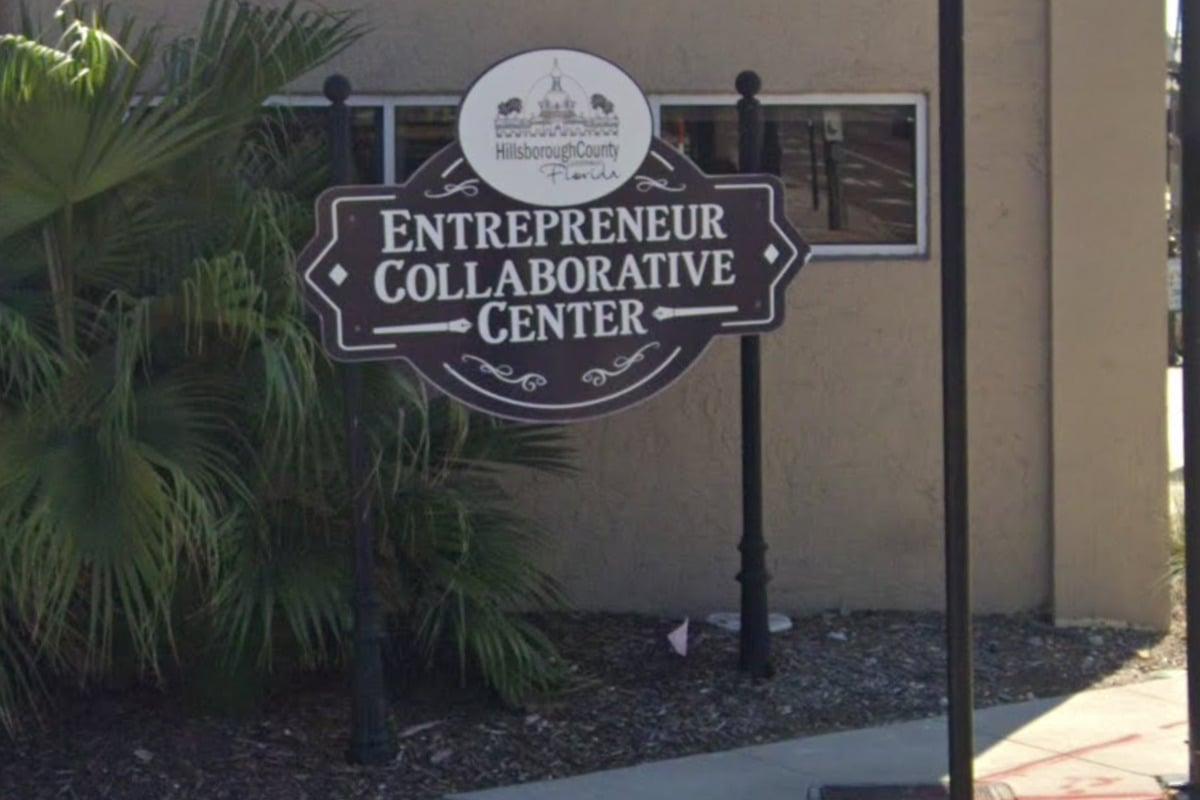
Hillsborough County's Entrepreneur Collaborative Center (ECC) was created to connect entrepreneurs with business service providers, resources, mentorship and specialized training.
It's located at:
2101 E. Palm Avenue in Tampa
The center serves businesses at different stages, from people who are still developing an idea to established companies.
Entrepreneurs can also find business workshops and training opportunities through the center.
👉 Hillsborough County Entrepreneur Collaborative Center
This is exactly why you shouldn't assume starting a business means figuring everything out alone.
There are people whose actual job is to help you figure out some of this stuff.
Use them. 😂
Step 15: Hillsborough County Has Small Business Help Too
Hillsborough County provides small business support, training, workshops, consulting and business resources for entrepreneurs throughout the county.
The Florida SBDC at Hillsborough County, for example, offers confidential no-cost consulting and professional training for entrepreneurs and small businesses across industries.
👉 Explore Hillsborough County Small Business Support
And remember something we talked about earlier:
Tampa city limits and Hillsborough County are not interchangeable.
A program available to a business anywhere in Hillsborough County may have different eligibility requirements from a program specifically funded for businesses operating within the City of Tampa.
Always check the address and eligibility requirements before assuming a program applies to you.
Before You Say “I Can't Afford to Start”... Do This First ✔️
Take an afternoon and create your own Tampa business funding checklist:
☐ Calculate your one-time startup costs
☐ Calculate your expected monthly operating expenses
☐ Determine your break-even point
☐ Decide how much personal money you're comfortable investing
☐ Research financing options appropriate for your business
☐ Check current City of Tampa entrepreneur programs
☐ Review Hillsborough County small business resources
☐ Schedule no-cost business consulting if you need help
☐ Research grants before assuming you'll qualify
☐ Never build your entire business plan around receiving grant money
☐ Keep an emergency cushion for unexpected expenses
And one more:
☐ Don't spend $2,000 making the business look successful before you've figured out how it's going to become successful. 😂
Okay... We Have the Idea, the Paperwork AND a Budget. Now Where Are We Putting This Thing? 📍
This is where the conversation gets especially interesting in Tampa Bay.
Maybe you can run the entire business from your laptop.
Maybe you need an office.
Maybe you're dreaming about a salon suite, studio, restaurant, warehouse or storefront with your business name across the front.
But before you fall in love with a space because the exposed brick would look so good on Instagram...
there are some much more important questions to ask. 👀
Can your type of business actually operate there?
What will the space really cost each month?
Does it have what your business needs?
And should you lease a space right now at all?
That's where we're going next.
Step 16: Where Are You Actually Going to Run This Business? 📍
You have the idea. You've looked at the paperwork. You've started figuring out the money.
Now comes the fun part:
Where is this business going to live?
Maybe the answer is your laptop and a spare room.
Maybe it's a salon suite.
Maybe you're already imagining your name across the front of a storefront with plants by the door and a grand opening balloon arch. 😂
But before you start mentally decorating a space you haven't even signed for, figure out what your business actually needs.
A physical location can become one of your biggest expenses, so the goal isn't to find the prettiest space.
It's to find a setup that makes sense for the business.
Step 17: Do You Even Need a Storefront? 👀
This question could save you a LOT of money.
Not every new business needs a traditional commercial space on day one.
Depending on what you're starting, you might be able to operate:
- From home
- Completely online
- From a coworking space
- From a private office
- From a salon or studio suite
- Through pop-ups or markets
- By traveling to customers
- From a shared commercial space
- From a traditional storefront
Before signing a lease, ask yourself:
Will this location help my business make enough additional money to justify what it costs?
A storefront can bring benefits such as visibility, customer access, dedicated workspace and room for certain types of operations.
It can also bring:
rent + utilities + insurance + deposits + maintenance + equipment + signage + build-out + other occupancy expenses.
Suddenly that cute storefront has a very long receipt. 😂
When Starting Smaller Might Make Sense
If your business can legally and practically operate without a traditional storefront, starting with lower overhead may give you time to test demand and learn what customers actually need.
That could mean selling online first, using pop-ups, renting a smaller workspace or choosing another flexible setup.
The important thing is not whether your first location looks impressive.
It's whether the numbers work.
Step 18: Found the Perfect Tampa Space? Don't Sign Anything Yet. ✋
Imagine this:
You find a space.
Great windows. Great sign potential. Plenty of room. You can already see exactly where the checkout counter is going.
There's just one tiny problem.
Can your business legally operate there?
Before committing to a location, investigate whether the property can actually accommodate your intended business use.
Start With Zoning
The City of Tampa uses zoning regulations to determine how properties can be used and developed.
That means a space being available for rent doesn't automatically mean every type of business can operate there.
Depending on the property and proposed use, you may need to investigate:
- Zoning classification
- Permitted use
- Parking requirements
- Occupancy
- Signage
- Building permits
- Fire requirements
- Health or industry-specific approvals
- Renovations or change of use
- Accessibility requirements
- Other applicable approvals
The City of Tampa provides zoning information and tools that can help business owners begin researching a potential property.
👉 City of Tampa Zoning Information
Check before you commit.
Finding out a space doesn't work for your business after you've invested money is a much more expensive way to learn about zoning. 😭
Step 19: Look Beyond the Monthly Rent 💸
You find a listing for a space at a price that seems manageable.
Perfect.
Except the advertised rent may not tell you everything the location will cost to operate.
Before agreeing to a commercial lease, understand the complete financial obligation.
Depending on the lease and property, costs could include:
- Base rent
- Security deposit
- Utilities
- Insurance
- Common-area expenses
- Maintenance responsibilities
- Taxes or other pass-through expenses
- Signage
- Internet
- Repairs
- Improvements/build-out
- Furniture
- Equipment
- Moving costs
And commercial leases can be very different from residential leases.
Before signing one, consider having an attorney or other qualified professional review the agreement so you understand what you're agreeing to, who pays for what and how long you're committed.
Because “I didn't realize that was in the lease” isn't a great business strategy. 😂
Step 20: Choose a Location Based on the BUSINESS, Not the Hype 📍
You've probably heard people say:
“Location, location, location.”
They're not wrong.
But a “great location” isn't universal.
A location that makes sense for a restaurant could be completely wrong for an appointment-based office.
Instead of asking:
“What's the best area in Tampa to open a business?”
Ask:
“What does MY business need from its location?”
Customer Access
If customers regularly visit you, think about how they will physically reach the business.
Consider:
- Parking
- Pedestrian access
- Transportation connections
- Visibility
- Entrances
- Delivery access
- Nearby destinations
- Hours of surrounding activity
Space Requirements
Does the property physically work for what you're planning?
Consider:
- Square footage
- Layout
- Storage
- Restrooms
- Utilities
- Equipment requirements
- Customer areas
- Employee areas
- Delivery/loading needs
- Potential room for growth
Your Budget
Don't choose a location that requires unrealistic sales just to keep the doors open.
Calculate the occupancy cost against your projected revenue and expected operating expenses.
A beautiful address doesn't fix bad math.
Step 21: Get to Know Tampa's Different Business Areas 🌴
One of the interesting things about starting a business in Tampa is how different the city's commercial areas can feel and function.
Instead of declaring one area “best,” compare the objective characteristics that matter to your particular business.
Downtown Tampa
Downtown includes offices, hotels, entertainment venues, residential buildings and destinations around the Tampa Riverwalk and surrounding urban core.
For a business considering Downtown, investigate available property types, transportation access, parking, nearby activity and the costs associated with the particular location.
Water Street Tampa
The Water Street district includes residential, hospitality, office, retail and dining uses near destinations such as Amalie Arena and the Tampa Riverwalk.
If you're considering space here, research current availability, permitted use and occupancy costs rather than assuming the visibility of the district automatically makes it right for your business.
Ybor City
Historic Ybor City offers a distinctive mix of restaurants, entertainment, retail, offices and historic commercial buildings.
Older buildings can also create different considerations when it comes to layout, renovations and permitted uses, so investigate the specific property rather than relying on the neighborhood name alone.
Tampa Heights
Tampa Heights includes a mix of residential and commercial development and destinations such as Armature Works.
Again, the question isn't whether Tampa Heights is “good for business.”
It's whether a particular property offers the space, permitted use, accessibility and economics your business requires.
Seminole Heights
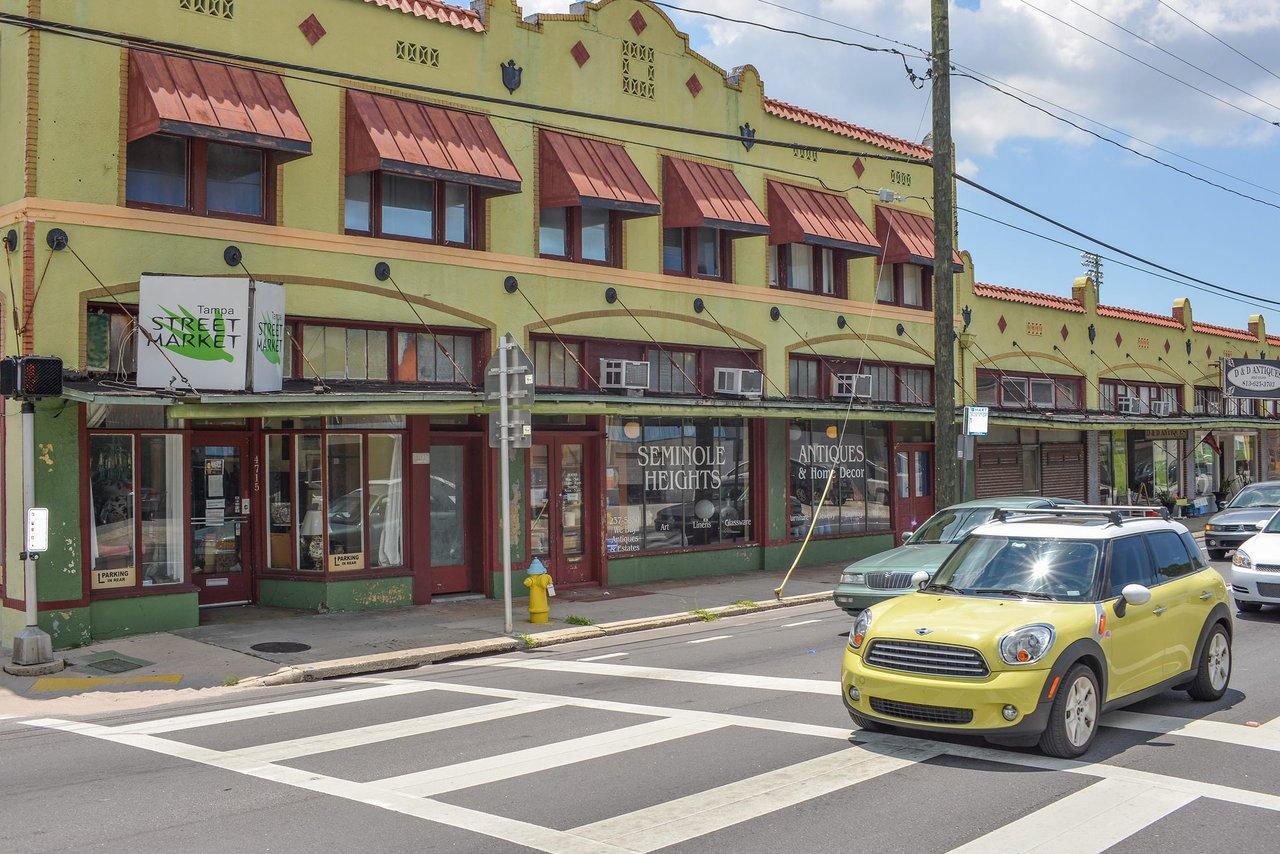
Seminole Heights contains a variety of independent restaurants, shops and other businesses along several commercial corridors.
Entrepreneurs considering the area should compare individual properties based on visibility, parking, building characteristics, permitted use and operating costs.
South Tampa
South Tampa contains numerous commercial corridors and property types, from offices and service businesses to restaurants and retail.
Rather than treating the entire area as one market, research the specific corridor and property you're considering.
The street can matter just as much as the ZIP code.
Step 22: What If Your Business Starts at Home? 🏠
Maybe you're reading all this thinking:
That's cute, but my headquarters is currently the dining-room table. 😂
That's perfectly possible for many businesses.
But as we mentioned earlier, home-based doesn't automatically mean requirement-free.

Before operating from a Tampa residence, investigate the requirements that apply to your business and property.
That can include:
- Applicable zoning or home-business rules
- Business Tax Receipt requirements
- State or professional licensing
- Customer visits
- Employees
- Parking
- Signage
- Storage
- Deliveries
- Insurance
- Lease restrictions, if renting
- Condominium or association rules, when applicable
And think about the home itself from a practical business standpoint.
Do you need:
- A dedicated office?
- Storage?
- Reliable high-speed internet?
- Space for equipment?
- A separate work area?
- Room to package orders?
- Convenient access to places you regularly travel for business?
For entrepreneurs who are also buying a home or relocating to Tampa Bay, those needs can become part of the home search.
That's where Frank Albert Realty can naturally become part of the bigger picture.
Your Business Has Needs. Your Home Does Too. 🏡
If you're relocating to Tampa while launching a business, don't choose where to live based solely on where your business is located.
Look at the entire picture:
- Your housing budget
- Property type
- Home-office or storage needs
- Commute and transportation options
- Proximity to places you personally need to reach
- HOA or condominium restrictions that may affect a home-based operation
- Your longer-term real estate plans
You can explore Tampa Bay neighborhoods and communities as you research different parts of the region.
This is where business planning and real estate planning can overlap without being the same decision.
Before You Fall in Love With a Location... Ask These Questions ✔️
Save this one.
Before committing to a Tampa business location, investigate:
☐ Is my intended business use permitted at this property?
☐ What zoning applies?
☐ Are additional permits or approvals required?
☐ What is the total monthly occupancy cost, not just advertised rent?
☐ Who pays for repairs and maintenance?
☐ Will I need renovations or a build-out?
☐ Are there signage restrictions?
☐ Does the space have the utilities and infrastructure I need?
☐ Is there appropriate customer and/or employee access?
☐ Is parking important for my business, and what is available?
☐ Can deliveries reach the property if needed?
☐ Does the layout work for my operations?
☐ Is there enough storage?
☐ How long is the lease commitment?
☐ What happens if I outgrow the space?
☐ Have I had the lease reviewed by an appropriate professional?
And perhaps the most important question:
Can my business comfortably afford this location?
Not:
“Can I technically scrape together the first month's rent?”
Can the business model realistically support the ongoing cost?
That's the difference.
You Found the Location. Now We Need Customers. 👀📱
A gorgeous storefront with nobody walking through the door is still an expensive empty room.
And an online business nobody can find isn't much better.
So once you've handled the idea, registration, budget and location, it's time to answer one of the biggest questions in this entire guide:
How are people in Tampa actually going to find you?
Next, we're getting into local SEO, Google Business Profile, social media, Tampa networking, partnerships, reviews, local events and marketing your new business without throwing money at every ad that appears on Instagram. 😂
Because opening the business is one accomplishment.
Getting customers through the door is the next one. 🚀
Step 23: You're Open! 🎉 Now Make Sure People Can Find You
So you've found the right setup for your business.
Now it's time to answer the question we left off with:
How are people in Tampa actually going to find you? 👀
Because a great location, beautiful website or amazing product can only do so much if your potential customers don't know you exist.
And no, you don't need to be on every social platform or spend your entire remaining budget on ads.
Start with a few marketing basics that can actually help people discover, understand and remember your business.
Start With Google 🔎
Think about how often you search “_____ near me” when you need a restaurant, photographer, hairstylist, contractor or other local business.
If your business is eligible, create a Google Business Profile so customers can potentially discover important information about your business through Google Search and Maps.
Keep your hours, website, contact information, services and photos accurate.
Your website should also clearly answer:
- What do you sell?
- Where do you operate?
- How does someone buy or book?
- How can someone contact you?
- Why should they choose your business?
Don't make people complete a scavenger hunt just to give you money. 😂
Use Social Media With a Purpose 📱
You don't need Instagram, TikTok, Facebook, LinkedIn, Pinterest, YouTube and a podcast by Friday.
Choose the platforms that make sense for your business and customers.
Then create content that does more than scream “BUY FROM ME.”
Show:
- Your products or services
- Behind-the-scenes moments
- How your process works
- Frequently asked questions
- Customer experiences, with permission
- Your business story
- New products or services
- Useful Tampa-related content when it's relevant
Followers are nice.
Customers are better.
Pay attention to which marketing channels actually generate calls, appointments, website visits and sales.
Get Involved in Tampa 🤝🌴
Don't overlook offline connections.
Collaborate with complementary Tampa businesses, participate in appropriate local events and explore entrepreneur networking opportunities.
The Tampa Bay Chamber, Entrepreneur Collaborative Center and other local organizations offer events and opportunities for business owners to connect.
And remember:
Networking isn't walking into a room and trying to sell something to everybody you meet. 😂
Build relationships. Learn. Ask questions. Let people learn what you do naturally.
Ask for Reviews ⭐
For a local business, genuine customer reviews can become an important part of your reputation and online presence.
Make it easy for customers to leave honest feedback after doing business with you.
And don't ignore the not-so-perfect reviews.
Sometimes a complaint tells you exactly what needs to improve.
Opening Day Isn't the Finish Line 🚀
Your first version of the business probably won't be your final version.
You may change your pricing.
A product you thought would sell out might barely move.
Something you almost didn't offer could become your bestseller.
Your customers will ask for things you never considered.
And at some point you'll probably look back at your original logo and think:
“Why did nobody stop me?” 😂
That's business.
Pay attention to your numbers, listen to customers, keep learning and use the Tampa business resources we've covered throughout this guide when you need help.
You don't have to know everything on Day One.
You just need to keep making informed decisions as the business grows.
Your Tampa Business Startup Checklist ✔️
Before you officially open, make sure you've addressed the major pieces:
☐ Research your business idea and Tampa market
☐ Create a practical business plan
☐ Calculate startup and monthly operating costs
☐ Choose an appropriate business structure
☐ Complete applicable Florida registrations
☐ Obtain an EIN if required
☐ Research state or professional licensing
☐ Check City of Tampa and Hillsborough County requirements
☐ Verify zoning before committing to a location
☐ Research insurance needs
☐ Explore Tampa entrepreneur resources and financing options
☐ Decide how customers will find you
☐ Create a website or online presence when appropriate
☐ Set up a Google Business Profile if eligible
☐ Develop an opening-day marketing plan
☐ Track your expenses, sales and marketing results
☐ Keep learning after you open
And finally:
☐ Actually start.
You can research forever.
At some point, the idea has to leave the Notes app. 👀
Starting a Business in Tampa: FAQs
Do I need an LLC to start a business in Tampa?
Not necessarily. An LLC is one possible business structure. Depending on your circumstances, other structures may include a sole proprietorship, partnership or corporation. Consider the legal and tax implications of each structure and seek professional advice when appropriate.
Do I need a business license in Tampa, Florida?
Requirements depend on the type of business and location. Businesses may need applicable state or professional licenses as well as City of Tampa or Hillsborough County Business Tax Receipts, permits or other approvals.
Can I start a business from my home in Tampa?
Many businesses can operate from home, but home-based businesses may still be subject to applicable registration, licensing, tax, zoning and property-related requirements. Renters should also review their lease, while condominium or association restrictions may apply to some properties.
Are there resources for new business owners in Tampa?
Yes. Entrepreneurs can investigate resources through organizations and programs including the City of Tampa Entrepreneur Support Hub, Small Business Navigator, Hillsborough County Entrepreneur Collaborative Center and Florida SBDC. Programs and eligibility requirements can change, so verify current information directly with each organization.
Are there grants for small businesses in Tampa?
The City of Tampa currently offers certain microgrant opportunities for qualifying businesses through its Entrepreneur Support Hub. Funding isn't guaranteed, and eligibility, deadlines and available programs can change. Always verify current opportunities directly with the City before including grant money in your business budget.
Build the Business. Find Your Place in Tampa Bay. 🌴
Starting a business can change more than what you do for work.
It can change where you live, how much space you need, where you spend your days and what you want your next chapter to look like.
If building your business also means relocating, buying a home or putting down roots in Tampa Bay, that's where Frank Albert Realty can help with the real estate side of the journey.
Explore Tampa Bay and connect with the Frank Albert Realty team to start exploring your options.
The business idea is yours. Tampa could be where you finally build it. 💼🌴