Florida’s Top 3 Most & Least Shark-Bite-Prone Beach Areas
Where Shark Bites Have Happened Most in Florida and Where They’ve Been Far Less Common
You’re standing waist-deep in beautiful Florida water when something brushes your leg.
Be honest. Are you staying calm or running back to shore like your life depends on it? 😂🦈
Florida is known for sunshine, gorgeous beaches and year-round coastal living, but apparently sharks have a few favorite spots too.
And when you look at the historical numbers, the difference between some Florida beach areas is pretty wild.
According to the Florida Museum’s International Shark Attack File, Volusia County has recorded more than 300 confirmed unprovoked shark bites since records began in 1882. Meanwhile, several Florida coastal counties sit at the opposite end of the list with only one recorded incident.
So, which beaches are near the biggest Florida shark-bite hotspots, and which areas have recorded surprisingly few?
We looked at the numbers. 👀
🦈 What Florida Area Has the Most Recorded Shark Bites?
Volusia County has the highest number of recorded unprovoked shark bites in Florida, according to historical International Shark Attack File data. The county includes New Smyrna Beach, a popular surfing destination that has become well known for shark encounters.
The top three Florida counties are:
- 🥇 Volusia County: 303 recorded bites
- 🥈 Brevard County: 147 recorded bites
- 🥉 Palm Beach County: 76 recorded bites
But before you cancel that beach trip, there is some important context.
Shark bites are still rare. These numbers represent historical incidents accumulated across many decades, not the likelihood that you will be bitten during your next afternoon at the beach.
So no, seeing New Smyrna Beach at the top of this list does not mean you need to trade your swimsuit for a hotel pool. 😂
At Frank Albert Realty, we love exploring the unexpected side of Florida living, from Tampa Bay neighborhoods and local favorites to the things that make you stop and say, “Wait... THAT happens here?”
And this one definitely qualifies.
Because once you see how far ahead Florida’s #1 shark-bite area is compared with everywhere else, you might look at your next beach day a little differently.
Let’s start with New Smyrna Beach and Volusia County, because #1 isn’t even close. 👀🦈
#1: Volusia County
New Smyrna Beach Has a Shark Reputation for a Reason 🦈
If you’ve ever Googled “Florida beach with the most shark bites,” there’s a good chance you’ve seen New Smyrna Beach pop up.
And this is one reputation that did not come out of nowhere. 👀
Volusia County has recorded more unprovoked shark bites than any other county in Florida, and New Smyrna Beach is the area that gets most of the attention.
So why here?
🌊 Why Are There So Many Shark Bites at New Smyrna Beach?
It comes down to a combination of sharks, surfers and the environment.
New Smyrna Beach is an extremely popular surfing destination. More people spending more time in the water naturally creates more opportunities for human and shark interactions.
Then there’s Ponce Inlet, located between the Daytona Beach and New Smyrna Beach areas.
Strong tidal flows around the inlet help attract fish and other marine life, which also attracts predators. Add good waves, sandbars, murky water and plenty of surfers kicking and paddling at the surface, and you have conditions where smaller sharks and people regularly cross paths.
Researchers with the Florida Museum have found that many bites in the area involve juvenile coastal sharks, including blacktip sharks, and most are minor.
Basically, sharks are not lining up at New Smyrna Beach waiting for someone to walk into the water. 😂
There are simply a lot of people and a lot of marine life sharing the same space.
🏄 Surfers Play a Big Role in the Numbers
There’s another reason New Smyrna Beach stands out.
Surfing and board sports account for a significant portion of shark-bite incidents.
Surfers spend long periods sitting, paddling and kicking in the water, often around breaking waves and sandbars where fish and sharks may also be moving.
Murky water can make visibility even harder.
That helps explain why an area famous for its waves can also rack up more shark encounters than a beach where fewer people spend hours in the surf.
👀 Would You Still Swim Here?
Here’s where the numbers need some perspective.
New Smyrna Beach may have an unusually high history of shark-human interactions, but that doesn’t mean every trip to the beach comes with a shark encounter.
People continue to surf, swim and enjoy this stretch of Florida coastline every day.
So now we have to ask:
Would knowing New Smyrna Beach sits in Florida’s #1 county for recorded shark bites stop you from getting in the water? Or are you grabbing the surfboard anyway? 😂🦈
Because our next Florida beach area has less than half of Volusia County’s historical total, but it still comes in at #2.
#2: Brevard County
Cocoa Beach and the Space Coast Come in Second 🦈🚀
New Smyrna Beach may get most of the shark-bite headlines, but travel a little farther south along Florida’s Atlantic Coast and you’ll reach another area with a surprisingly long history of shark encounters.
Welcome to Brevard County, home to Cocoa Beach, Cape Canaveral and some of the most recognizable stretches of Florida’s Space Coast.
According to the International Shark Attack File, Brevard County has recorded 147 confirmed unprovoked shark bites since 1882, putting it at #2 in Florida.
That sounds like a lot until you remember Volusia County has recorded 303. 👀
Still, 147 is enough to make Brevard County stand out from almost every other coastal county in the state.
🌊 Why Does Brevard County Rank So High?
Like Volusia County, Brevard has something sharks and humans both seem to enjoy:
A lot of activity near the shoreline.
The Space Coast is packed with popular beaches where people surf, swim, paddle and spend hours in the Atlantic.
Cocoa Beach is especially well known for surfing, and that matters when talking about Florida shark bite statistics. Surfing and other board sports have historically accounted for a significant share of unprovoked shark-bite incidents.
Many shark encounters also happen in nearshore waters around sandbars, breaking waves and areas where fish gather.
In other words, the same conditions that can make a beach fun for humans can also mean sharing the water with plenty of marine life. 🐟🦈
🏄 Cocoa Beach Is Still Cocoa Beach
Here’s the part that can get lost when you see a number like 147:
Brevard County’s total stretches across more than a century of historical records.
It does not mean someone walking into Cocoa Beach today has a high probability of encountering a shark.
Cocoa Beach remains one of Florida’s best-known surf and beach destinations, and people continue to swim, surf and enjoy the coastline every day.
The numbers are interesting, but they need context.
So would 147 recorded shark bites make you rethink getting into the water?
Or are you still grabbing the board and heading straight for the waves? 😂🌊
Either way, Brevard County has officially claimed the #2 spot on our list.
And now we’re heading farther south because Florida’s #3 shark-bite area takes us to Palm Beach County. 👀🦈
#3: Palm Beach County
Palm Beach Is Beautiful, but the Sharks Know It Too 🦈🌴
Palm Beach County is known for blue Atlantic water, palm-lined coastlines and gorgeous stretches of beach.
But underneath all that pretty water? Yep, sharks live there too. 😂
According to historical data from the International Shark Attack File, Palm Beach County has recorded 76 confirmed unprovoked shark bites since 1882, giving it the #3 spot in Florida.
That puts it well below Volusia County’s 303 and Brevard County’s 147, but still high enough to make Palm Beach County one of Florida’s biggest shark-bite hotspots.
🌊 Why Does Palm Beach County Have So Many Shark Encounters?
Palm Beach County sits along Florida’s Atlantic Coast, with miles of oceanfront where swimming, surfing, snorkeling, diving and other water activities are part of everyday beach life.
And humans are definitely not the only ones enjoying these waters.
Florida’s Atlantic coastline provides habitat for several shark species, including blacktip sharks, which are commonly found in Florida waters.
Blacktips are especially interesting because they are highly mobile. During seasonal migrations, large numbers can move along portions of Florida’s coastline.
More sharks moving through coastal waters combined with plenty of people enjoying the ocean creates more opportunities for the two to cross paths.
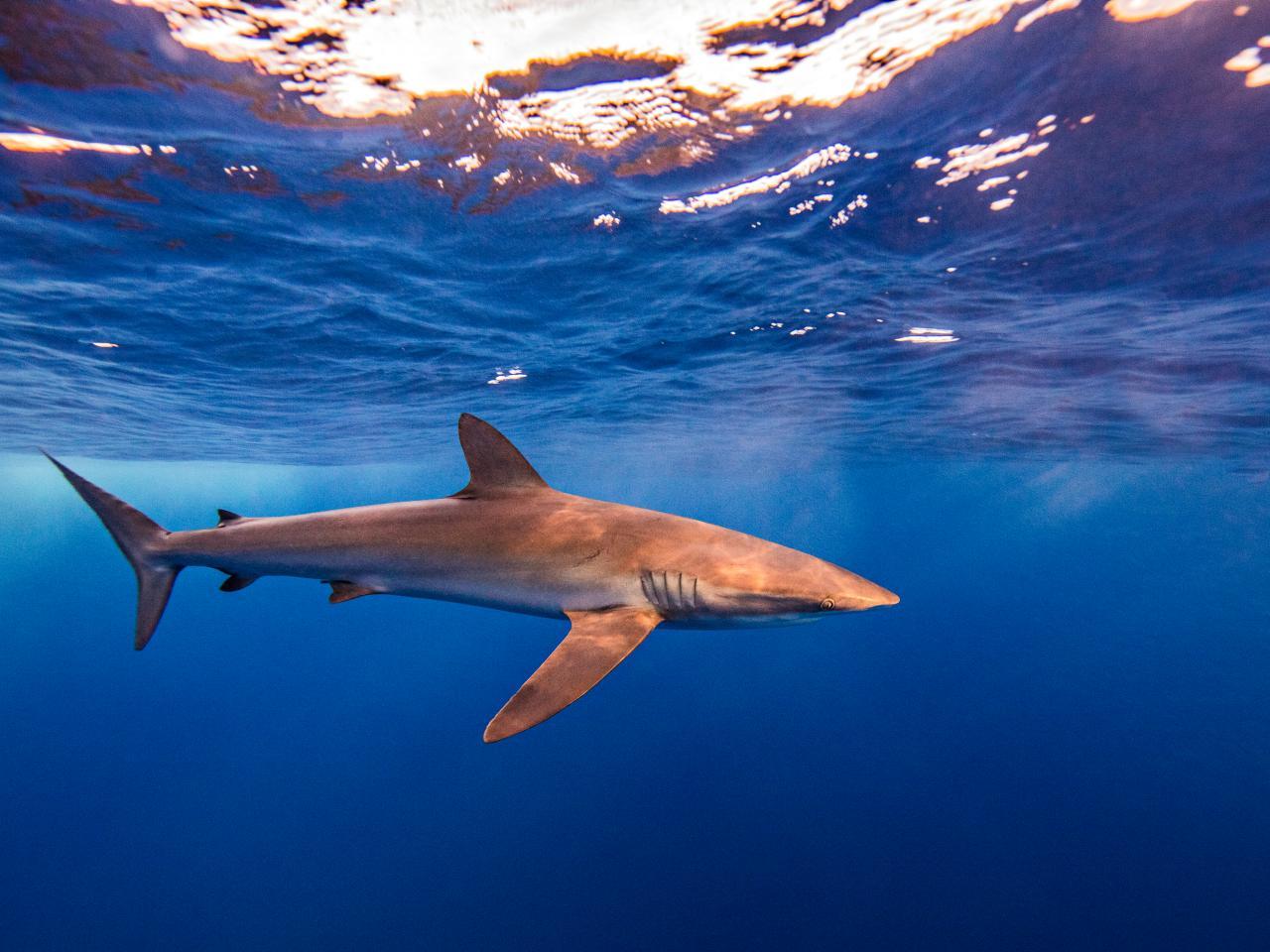
🦈 Does 76 Shark Bites Mean Palm Beach Is Dangerous?
Not exactly.
Remember, 76 is a historical countywide total dating back to 1882.
It covers more than a century of recorded incidents across Palm Beach County, not one beach, one summer or one particularly shark-filled weekend. 😂
The International Shark Attack File also separates unprovoked bites from incidents where a person initiated an interaction with a shark.
An unprovoked bite means the person was in the shark’s natural habitat and did not provoke the animal.
That distinction matters when comparing Florida shark bite statistics.
👀 Now Look at the Difference
Here’s where our top three get interesting:
Volusia County: 303
Brevard County: 147
Palm Beach County: 76
Palm Beach County has roughly half the historical total of Brevard County and about one-quarter of Volusia County’s total.
That gives you some perspective on just how unusual Volusia County’s numbers really are.
So after seeing Florida’s top three, we have a question:
Would you rather swim in Palm Beach County knowing its history, or are you officially moving your beach chair to the Gulf Coast? 😂🌊
Because now we’re flipping this entire list around.
We found Florida coastal counties sitting at the very bottom of the historical shark-bite table, and the difference is huge.
Florida’s 3 Least Shark-Bite-Prone Coastal Counties
From 303 Recorded Bites to Just ONE? 👀🦈
We’ve talked about Florida’s shark-bite hotspots, but now let’s look at the complete opposite end of the list.
And the difference is honestly kind of crazy.
While Volusia County has recorded 303 confirmed unprovoked shark bites, three Florida coastal counties listed by the International Shark Attack File have recorded just one each since historical records began.
Yep.
ONE. 😳
Before you start planning your next beach vacation based entirely on that number, remember that historical totals do not tell us your exact risk today. Sharks can be present anywhere along Florida’s coastline, and a low number of recorded bites does not mean an area is shark-free.
Still, the comparison is pretty interesting.
🏖️ Walton County: 1 Recorded Bite
If white sand and clear Gulf water are more your speed, you probably already know Walton County.
This stretch of Florida’s Panhandle includes popular coastal areas such as South Walton, where beach communities line the Gulf of Mexico.
According to the historical county data, Walton County has recorded just one confirmed unprovoked shark bite.
Now here’s where things get interesting.
Recent incidents can take time to be investigated and classified, and historical databases can change as new information is verified. That’s why we’re using the International Shark Attack File’s published county table rather than calling any individual beach the “safest.”
So think low historical recorded total, not no sharks allowed. 😂🦈
🌴 Charlotte County: 1 Recorded Bite
Next up is Charlotte County on Florida’s Gulf Coast.
Compared with Florida’s Atlantic Coast hotspots, Charlotte County sits at the very bottom of the historical ISAF county table with only one confirmed unprovoked shark bite listed.
That is a huge difference from what we just saw on the other side of the state.
Volusia County: 303
Charlotte County: 1
If you were expecting every Florida coastal area to have dozens of recorded incidents, this is probably where the list starts getting surprising.
But again, fewer recorded encounters do not mean sharks are absent from the water. They are part of Florida’s natural marine ecosystem.
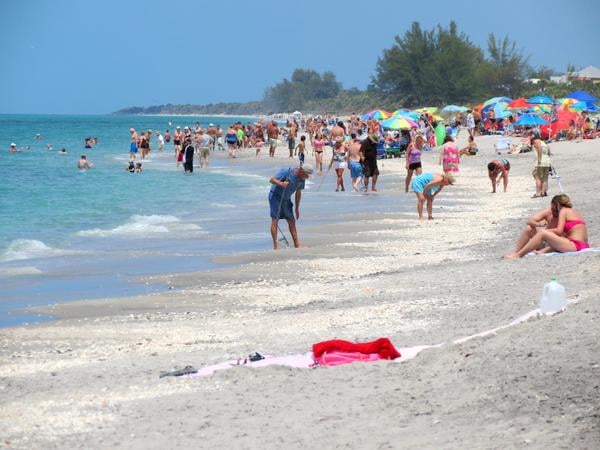
🌊 Santa Rosa County: 1 Recorded Bite
Our third county takes us back to Florida’s Panhandle.
Santa Rosa County is also listed with only one confirmed unprovoked shark bite in the historical ISAF county data.
That puts Walton, Charlotte and Santa Rosa counties together at the bottom of the published Florida list.
And when you compare those numbers with Florida’s top three, the difference is hard to ignore:
Volusia County: 303
Brevard County: 147
Palm Beach County: 76
Walton County: 1
Charlotte County: 1
Santa Rosa County: 1
That is exactly why looking at the actual Florida shark bite statistics is more interesting than simply assuming sharks are equally common everywhere people swim.
🦈 Does This Mean These Are Florida’s Safest Beaches From Sharks?
No, and that distinction is important.
These numbers tell us where confirmed unprovoked shark bites have historically been recorded. They do not measure how many sharks are currently in the water, how many people visit each beach, how many hours people spend swimming or surfing, or what conditions will be like during your visit.
So we’re not giving Walton, Charlotte or Santa Rosa County a “sharks don’t come here” stamp. 😂
We’re simply looking at the counties that currently sit at the lowest end of Florida’s published historical shark-bite table.
And that brings up an even bigger question:
Why is there such a massive difference between one part of Florida and another?
Why does one county have more than 300 recorded bites while another has just one?
It turns out, the answer involves much more than simply how many sharks are in the water.
Why Does Florida Have So Many Shark Bites?
Plot Twist: It’s Not Just Because Florida Has More Sharks 🦈
After seeing 303 recorded bites in Volusia County compared with just one in several other Florida counties, it’s easy to assume one thing:
There must be way more sharks swimming around certain beaches.
But that’s not the whole story.
When it comes to Florida shark bite statistics, the number of people in the water matters just as much as what is swimming underneath them. 👀
🏖️ Florida Has A LOT of People in the Water
Florida has hundreds of miles of coastline and some of the most popular beach destinations in the country.
Every day, people are:
- 🏄 Surfing
- 🏊 Swimming
- 🤿 Snorkeling
- 🏖️ Wading near shore
- 🚣 Paddleboarding and kayaking
- 🎣 Fishing from beaches, piers and boats
More people spending more time in the ocean creates more opportunities for people and sharks to cross paths.
Think of it this way:
A beach can have sharks and very few recorded bites if relatively few people are entering the water.
Meanwhile, another beach could have similar marine life but thousands of swimmers and surfers entering the water regularly.
The second beach naturally creates more opportunities for an encounter.
🏄 Surfing Makes a Difference
There’s a reason places like New Smyrna Beach and Cocoa Beach appear near the top of Florida’s historical list.
They are also popular surfing destinations.
Surfers spend much more time in the water than someone taking a quick swim. They paddle through breaking waves, sit farther from shore and regularly spend time around sandbars and areas where marine life may be active.
That means more opportunities to cross paths with a shark.
It does not mean sharks are specifically hunting surfers.
🐟 Where There Are Fish, Sharks May Follow
Florida’s warm coastal waters support a huge variety of marine life.
Schools of baitfish can move close to shore, and sharks naturally follow food sources.
That is one reason swimmers should pay attention when the water suddenly seems packed with fish, diving seabirds or other signs of active feeding.
If the fish look like they’re trying very hard to leave the water, maybe don’t volunteer to take their place. 😂
🌊 Water Conditions Matter Too
Sharks rely heavily on their senses when navigating and feeding.
In murky water, visibility can be limited for both sharks and people. Breaking waves, currents and stirred-up sand can make it harder to see what is nearby.
Some shark bites are believed to be cases of mistaken identity or exploratory bites rather than predatory attacks.
This is also why the word “bite” is more accurate than assuming every encounter is a shark deliberately attacking a person.
🦈 So Why Does Florida Rank So High?
It’s really a combination of factors:
Lots of coastline + warm water + marine life + millions of beach visits + swimming + surfing = more opportunities for shark and human encounters.
That doesn’t mean you need to spend your next Florida beach day staring nervously at every shadow in the water.
Shark bites remain rare compared with the enormous amount of time people spend enjoying Florida’s coastline.
And there are simple things you can do to make an already small risk even smaller.
But before we get into those tips, we have one very important local question to answer:
What about Tampa Bay? 👀🌴🦈
Because after seeing those Atlantic Coast numbers, you’re probably wondering where our side of Florida fits into all of this.
What About Shark Bites in Tampa Bay? 🌴🦈
Gulf Coast Beach Lovers, This One’s for You
If you’ve been reading all those Atlantic Coast numbers thinking, “Okay, but what about OUR beaches?” we were wondering the same thing. 😂
Tampa Bay may not have the surfing reputation of New Smyrna Beach or Cocoa Beach, but sharks are absolutely part of the marine ecosystem along Florida’s Gulf Coast.
That includes the waters around popular destinations like Clearwater Beach, St. Pete Beach and the beaches of Pinellas County.
But historically, the numbers look very different here.
🦈 How Many Shark Bites Have Been Recorded in Pinellas County?
According to the International Shark Attack File’s historical Florida county data, Pinellas County has recorded 13 confirmed unprovoked shark bites since 1882.
Now compare that with our top three:
- Volusia County: 303
- Brevard County: 147
- Palm Beach County: 76
- Pinellas County: 13
That puts the historical Pinellas County total far below Florida’s biggest shark-bite hotspots.
But remember, that does not mean Tampa Bay beaches are shark-free.
🌊 Yes, There Are Sharks Around Tampa Bay
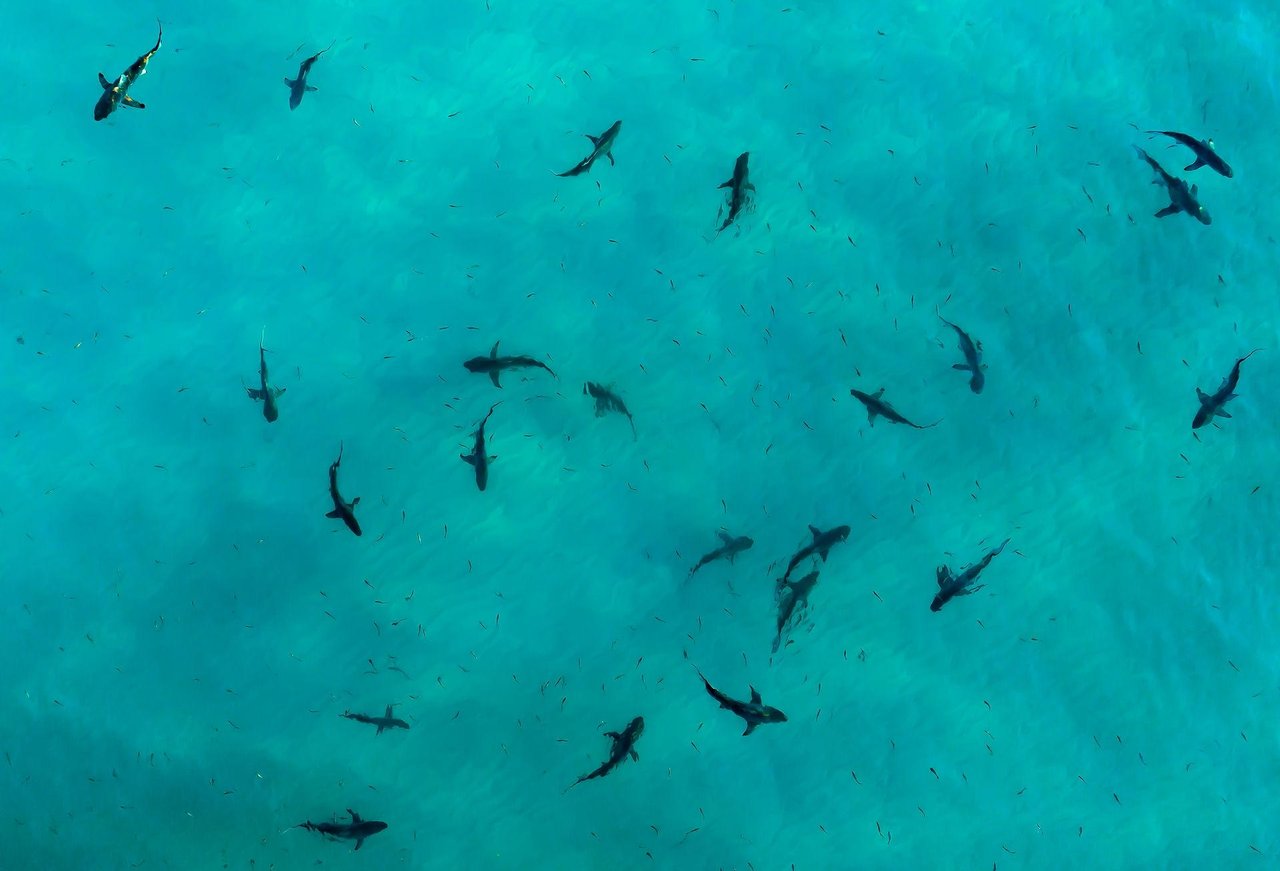
If you’ve ever looked into that beautiful Gulf water and wondered what might be swimming underneath you, the answer includes sharks. 😂
Several shark species can be found in waters around Florida’s Gulf Coast and Tampa Bay.
That is completely normal.
Sharks are part of a healthy marine ecosystem, and simply having sharks in an area does not mean swimmers are constantly at risk of being bitten.
The more useful question is not:
“Are there sharks?”
It’s:
“How often do shark and human interactions actually result in a bite?”
Historically, Pinellas County’s recorded total has been much lower than the totals seen in Volusia, Brevard and Palm Beach counties.
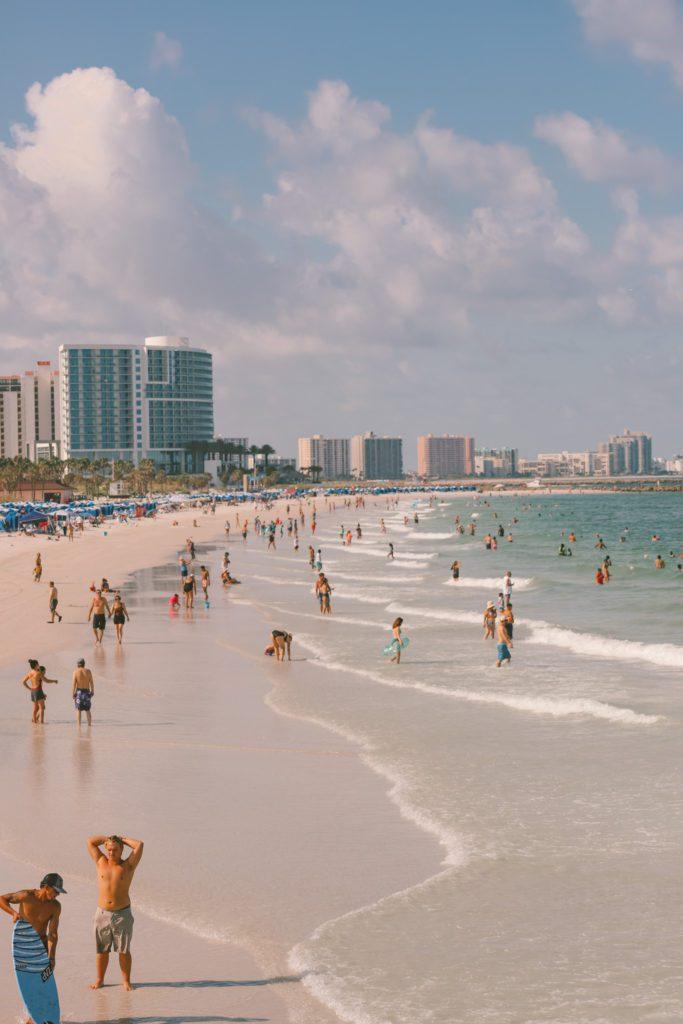
🏖️ Clearwater Beach vs. New Smyrna Beach
Here’s where the comparison gets interesting.
Both are famous Florida beach destinations, but their historical county shark-bite numbers are dramatically different.
New Smyrna Beach sits in Volusia County, which has recorded 303 confirmed unprovoked bites.
Clearwater Beach sits in Pinellas County, which has recorded 13.
That does not automatically make one individual beach “safe” and another “dangerous.”
Different coastlines have different water conditions, marine environments, visitor numbers and recreational activities. New Smyrna Beach is also a major surfing destination, meaning people often spend long periods farther into the surf.
Still, the historical difference is definitely enough to make you say:
“Wait... THAT big of a difference?” 👀
🌴 Just Another Part of Living in Tampa Bay
One of the fun things about living around Tampa Bay is how quickly you can go from city life to a Gulf Coast beach day.
You can explore Tampa neighborhoods, spend an afternoon near the water and catch a Gulf sunset without leaving the region.
At Frank Albert Realty, that Florida lifestyle is part of what we love sharing, from local neighborhoods and restaurants to beaches, events and the unexpected facts you probably weren’t Googling until five minutes ago. 😂
And yes, Tampa Bay shark bites officially made that list.
So, Gulf Coast beach lovers...
Does seeing 13 instead of 303 make you feel any better about getting in the water? 🌊🦈
Because regardless of which Florida coast you choose, there are a few simple things you can do to reduce your chances of having the kind of beach story nobody wants to bring home.
How to Lower Your Shark-Bite Risk in Florida 🦈🌊
You Don’t Have to Give Up Your Beach Days
After reading about Florida beaches with the most shark bites, you might be looking at the ocean a little differently. 😂
But there is no reason to cancel every beach day on your calendar.
Shark bites are rare, and there are several simple precautions you can take before getting into Florida waters.
👯 Don’t Swim Alone
This one is simple.
Stay with a buddy or group when possible.
Swimming with other people means someone is nearby if an emergency happens, whether it involves a shark, strong current, medical issue or something completely unrelated.
🌅 Be Extra Careful Around Dawn and Dusk
That sunrise swim might look incredible on Instagram, but dawn and dusk can be active feeding periods for some shark species.
Lower light also makes it harder for both you and marine animals to see clearly.
If you want that sunrise beach photo, maybe enjoy the view from the sand first. 😂📸
🐟 Pay Attention to Baitfish
See a huge school of little fish suddenly moving through the water?
Give them some space.
Large groups of baitfish can attract bigger predators, including sharks.
Also pay attention to diving seabirds. Birds repeatedly diving into one area can indicate fish feeding near the surface.
If the ocean suddenly looks like a seafood buffet, you probably do not need to join it. 😂
🎣 Stay Away From Active Fishing Areas
Avoid swimming near people actively fishing from the beach, pier or boat.
Fishing activity, bait and struggling fish can attract sharks and other marine animals.
That beautiful empty patch of water away from the fishing lines is probably the better choice anyway.
✨ Leave the Extra Sparkle on Shore
The Florida Museum recommends avoiding shiny jewelry in the water because reflected light can resemble the shine of fish scales.
Your earrings do not need an ocean adventure.
Leave the jewelry with your beach bag and let the water provide the sparkle. 😂🌊
🩸 Avoid the Water if You’re Bleeding
Sharks have highly developed senses, so entering the water while actively bleeding is not recommended.
If you have a fresh cut or open wound, waiting until it is properly covered or healed is a simple precaution.
🌊 Stay Relatively Close to Shore
Swimming far from shore can separate you from immediate assistance and place you farther into areas where larger marine animals may travel.
Staying relatively close to shore also makes it easier to hear lifeguard instructions and respond quickly if conditions change.
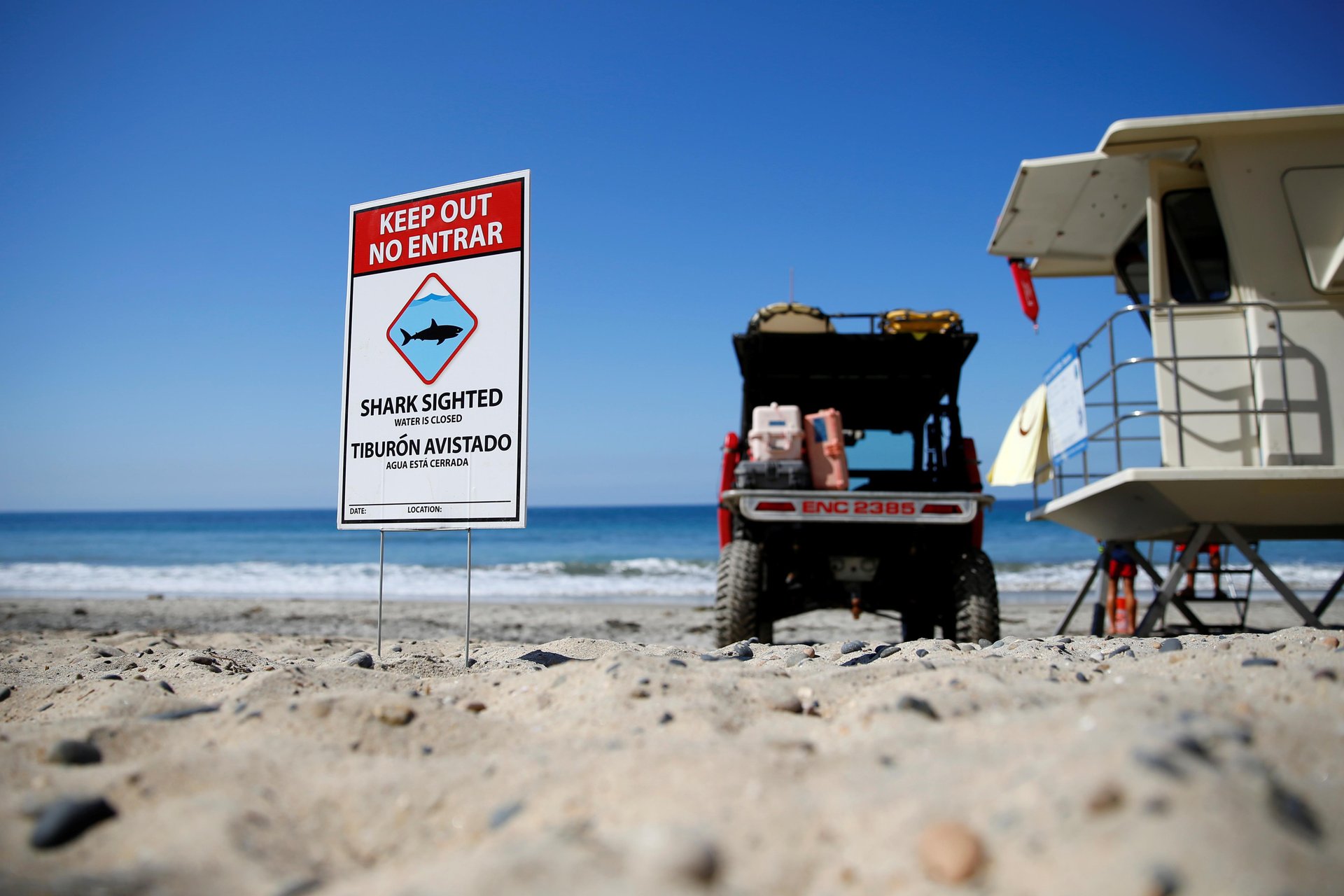
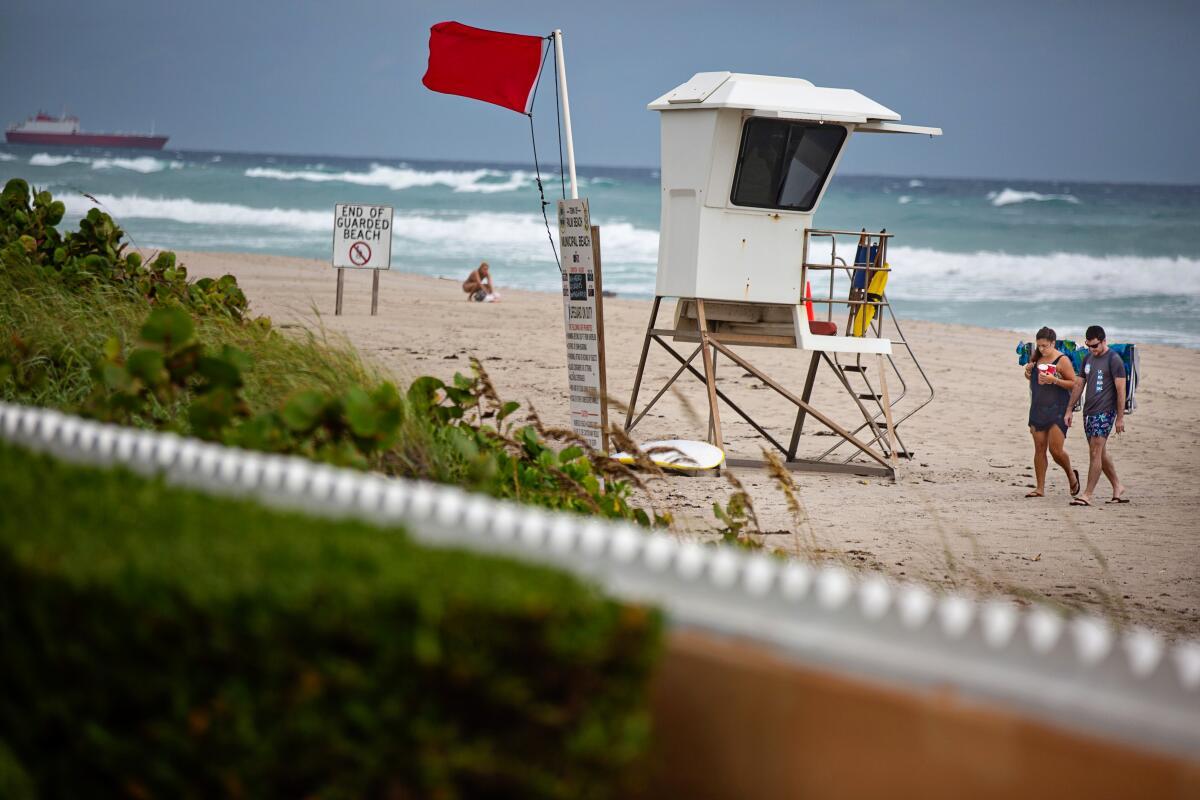
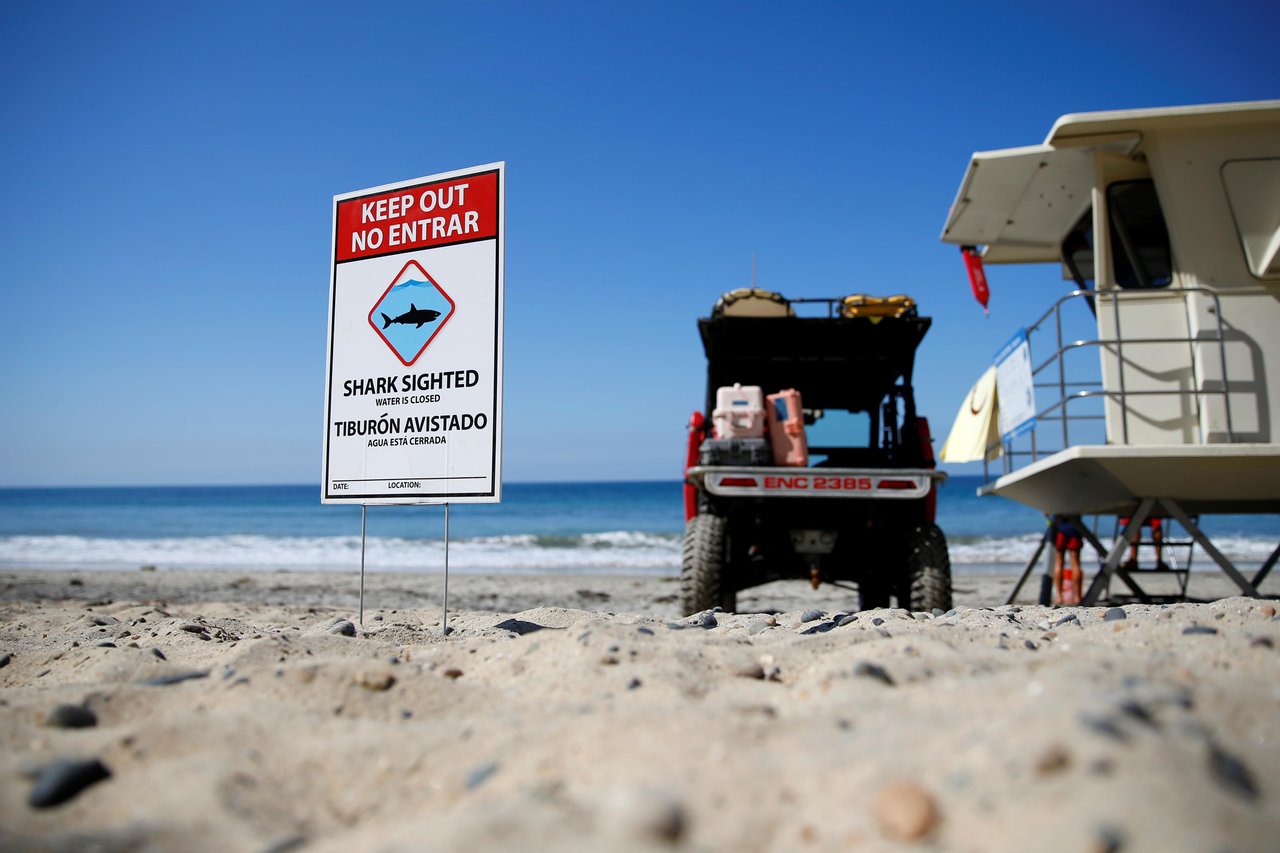
🚩 Pay Attention to Lifeguards and Beach Warnings
This might be the easiest tip on the entire list.
If lifeguards tell you to get out of the water, get out.
Beach conditions can change quickly because of marine activity, rip currents, weather or other hazards.
Check posted warnings, flags and local beach advisories before entering the water.
🦈 And If You Actually See a Shark?
Stay as calm as possible and leave the water carefully and efficiently.
Avoid deliberately approaching, touching or attempting to photograph a shark up close.
Yes, even if you think the video would go viral. 😂
Your vacation story is already interesting enough.
🏖️ The Goal Isn’t to Fear the Ocean
Sharks belong in Florida waters.
The goal is not to make people afraid of swimming at New Smyrna Beach, Cocoa Beach, Palm Beach, Clearwater Beach or anywhere else along Florida’s coastline.
It’s simply about understanding the environment you’re entering and making smart decisions while you’re there.
A little awareness goes a long way.
So pack the sunscreen, check the beach conditions and enjoy the water.
Just maybe don’t swim directly into the giant school of fish everyone else is swimming away from. 😂🦈
We’ve covered the hotspots, the lowest historical totals, Tampa Bay and ways to lower your risk.
Now let’s answer the questions people are actually typing into Google.
Florida Shark Bite FAQ 🦈
The Questions Everyone Has After Reading This List
At this point, you probably have a few more questions before putting your feet back in the water. 😂
Here are some of the most common questions about Florida shark bites, shark-bite hotspots and Florida beaches.
🦈 What Beach in Florida Has the Most Shark Bites?
New Smyrna Beach is the Florida beach most commonly associated with shark bites.
It is located in Volusia County, which has recorded 303 confirmed unprovoked shark bites since 1882, according to historical International Shark Attack File data.
New Smyrna Beach is also a major surfing destination, and the combination of surfers, nearshore marine life, sandbars and conditions around Ponce Inlet creates plenty of opportunities for sharks and humans to cross paths.
That does not mean every visit comes with a shark sighting or encounter.
But if you were searching for the Florida beach with the most shark bites, New Smyrna Beach is the name you’re most likely to see.
🌊 Which Side of Florida Has More Recorded Shark Bites?
Florida’s historical county data shows especially high totals along portions of the Atlantic Coast.
The state’s three highest historical county totals are all on the Atlantic side:
Volusia County: 303
Brevard County: 147
Palm Beach County: 76
By comparison, Pinellas County, home to Clearwater Beach and other Tampa Bay Gulf Coast beaches, has 13 recorded unprovoked bites in the same historical dataset.
That does not mean every Atlantic beach has more shark activity than every Gulf Coast beach. These numbers reflect documented historical incidents and can also be influenced by how many people use the water and what activities they are doing.
🏖️ Which Florida Beaches Have the Least Shark Bites?
There is no reliable way to label a particular Florida beach as having the lowest shark-bite risk based only on historical records.
However, the International Shark Attack File’s Florida county table lists Walton County, Charlotte County and Santa Rosa County with one confirmed unprovoked bite each.
Those are among the lowest historical totals in the published county data.
Just remember that low historical numbers do not mean shark-free waters.
🌴 Are There Sharks Near Tampa Bay Beaches?
Yes. Sharks naturally live in Gulf Coast waters, including waters around Tampa Bay.
That is a normal part of Florida’s marine ecosystem.
Historically, however, Pinellas County has recorded far fewer confirmed unprovoked bites than Florida’s leading Atlantic Coast counties.
So if you’re standing on Clearwater Beach staring suspiciously at every dark spot in the water, remember:
Shark presence and shark bites are two very different things. 😂🦈
👀 How Common Are Shark Bites in Florida?
Shark bites are rare compared with the enormous number of people who enter Florida waters.
Florida frequently records more unprovoked shark bites than other U.S. states, but the overall chance of an individual beachgoer being bitten remains very low.
Historical numbers can look dramatic when you see hundreds of incidents listed together, but those totals span many decades.
So should you respect sharks and pay attention to ocean conditions?
Absolutely.
Should you assume a fin is coming for you every time you walk into the Gulf or Atlantic?
Probably not. 😂
Understanding the numbers, following beach warnings and using basic ocean safety precautions can help you enjoy Florida’s coastline without turning every beach day into the opening scene of Jaws.
And now that we’ve answered the biggest shark questions, there’s only one thing left to decide:
After seeing the numbers, which Florida beach are YOU still getting in the water at? 🦈🌴
So, Are You Still Getting in the Water? 🦈🌴
After looking at the numbers, one thing is pretty clear:
Not every Florida coastline has the same shark-bite history.
Volusia County sits at the top with 303 recorded unprovoked bites, while several Florida coastal counties sit at the opposite end of the historical list with just one.
And somewhere between those two extremes, millions of people continue doing exactly what Floridians do best:
Grab the sunscreen, find some water and enjoy another beautiful day outside. 😂☀️
🌊 Florida Is Always Full of Surprises
One minute you’re watching a sunset on the Gulf Coast.
The next you’re discovering that New Smyrna Beach sits in a county with more than 300 recorded shark bites.
That’s Florida for you. 😂
But shark-bite statistics are only one tiny piece of what makes living here interesting.
From Tampa Bay neighborhoods and Gulf Coast beaches to waterfront dining, local events, hidden gems and weekend adventures, there is always something new to explore.
And sometimes learning more about where you live makes you appreciate it even more.
🏡 Thinking About Making Tampa Bay Home?
At Frank Albert Realty, real estate is about more than finding four walls and a roof.
It’s about understanding the communities, neighborhoods and lifestyle surrounding the place you call home.
Whether you’re buying, selling, relocating to Tampa Bay or simply exploring what different areas have to offer, our team is here to help you navigate your next move with local knowledge and personalized guidance.
Ready to explore? Contact us today!
And before you go, we have one last question:
👀 Which Florida Beach Are You Still Swimming At?
New Smyrna Beach? Cocoa Beach? Palm Beach? Clearwater Beach? Somewhere else entirely?
Tell us which one you’re choosing.
And if your answer is...
“I’ll be at the pool.”
Honestly, after reading 303, we understand. 😂🦈🌴